
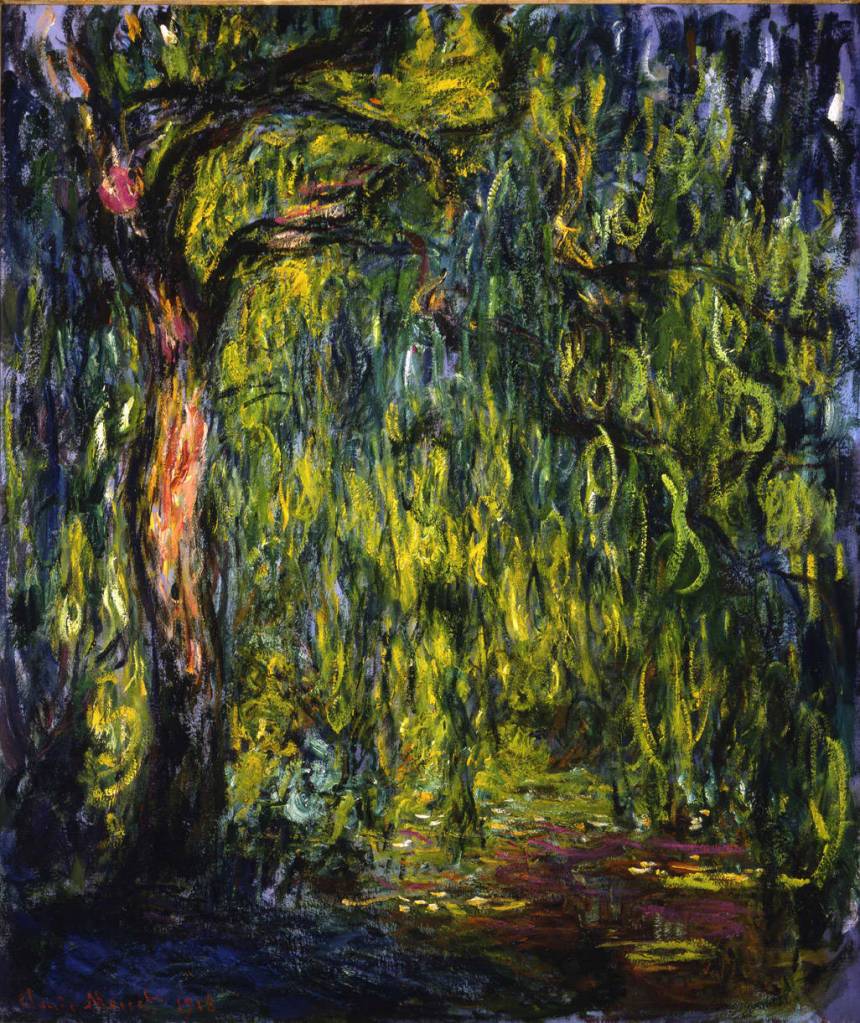
The Willow
The Khanka Lowland
February 12, 1928
I.
The hut sat on a broad cliff. In the garden, the willow groaned. Its long branches thrashed in the wind. Snow fell in heavy sheets. Sasha lit a candle and set it on the windowsill. She pressed her forehead against the glass and peered into the night.
“Volya,” she whispered. “Look at our willow.”
Her husband grumbled from the stove.1
“What is it?”
“I’m afraid for the tree.”
“It will be fine,” he said. “Go to sleep.”
Sasha stayed at the window.
“God has sent a bitter night,” she muttered.
She crossed herself and went to bed.
Outside, the willow snapped like a whip.
1In traditional Russian peasant homes, the stove [russkaya pech] often doubled as a bed. Its broad, flat top retained warmth long after the fire had gone out, making it a natural place to sleep during the winter months.
II.
By morning, the storm had passed. Sasha awoke with sunlight in her eyes and ran to the window. The willow had fallen. Splinters lay across the cucumbers and cabbage. She returned to the stove.
“Volya,” she cried, shaking her husband. “We must see Ivan now!”
He did not stir.
“Volya!”
He slowly opened his eyes.
“What is it, Sasha? Have you prepared food?”
“What do you mean?!” she exclaimed. “No, I haven’t. The tree has toppled.”
“You know.” Volya smacked his lips. “I just had a wonderful dream. Do you want to know?”
“No, we must —”
“You must imagine the fattest plum, heavy with juice. And yet, how woeful it looked! It clung to its stem on a tree too thin to bear the wind, and we wept together. One squall would waste this royal fruit.”
Sasha’s eyes softened.
“Did you catch it?”
“No.” Volya sighed. “The earth shook, and it fell.”
He turned to his wife.
“I had gotten my ladder and basket. I was climbing…”
“Perhaps,” Sasha said with a smile. “Our tree had fallen.”
She pointed to the window. Volya’s eyes followed.
“Oh,” he exclaimed. “The willow is gone!”
“Yes. We must see Ivan.”
Volya yawned.
“Why?”
“The garden, Volya.”
“What of it?”
“It has no shade. We won’t have enough vegetables to last us till Lent.”
“Nonsense.” He waved his hand. “Can’t we wait awhile? The sun has only just come up.”
“No, I’m afraid not!”
Volya eyed her uneasily and pulled the blanket closer around himself. Sasha went to prepare the morning tea. For a while, neither spoke. When the samovar began to whistle, she poured two cups and set them on the table. She began to drink right away.
Volya shuffled over and sat down.
“Is this where the plum went?” he chuckled dryly.
“No,” she replied.
“Pity.”
Volya took his first sip. His eyes brightened.
“Sasha, did you put mint in—”
“Volya,” his wife said sternly. “Prohor won’t harness himself, you know.”
He sighed.
“No, I suppose he won’t.”
Draining the last of his tea, Volya slowly pushed back his chair.
“Where is Ivan, again?”
“Past the Sikhote-Alin.”
“I see.”
Watching Sasha hurriedly clear the table, he headed out the door.
Outside, the morning was clear and cool. Water dripped from the eaves. Volya stopped on the doormat and drew a deep breath. His chest filled with the promises of the day.
Perhaps he could visit Viktor Stepanovich, the shoe salesman in town, and buy himself a new pair. Or call on his good friend Pyotr Andreyevich and let the morning slip away over vodka and a few well-worn stories.
But alas.
Volya went around the hut to the shed. Prohor nickered upon seeing him.
“It’s glorious, isn’t it?” he remarked wistfully.
At the back of the shed stood a dusty wagon. It had not been used in months, though Volya still polished its brass fittings. A faded imperial crest was embossed near the wagon bed. He rubbed it slowly, then harnessed Prohor and led him out. An unfamiliar warmth brushed his face. He looked up. The clouds had scattered, and the sun beat against the earth.
“Beastly,” Volya muttered.
He led Prohor toward the hut. Near the cliff, he glanced at the garden. The willow lay across the ground, its roots exposed and its branches scattered over the cabbage beds. Volya stopped.
He drew a deep breath and tugged at Prohor’s reins.
“Sasha!” he called. “Are you ready?”
Inside, his wife was folding the bed covers. She heard his call, followed by the sound of his footsteps.
“Now he’s in a hurry,” she huffed.
Volya rushed inside.
“Sasha, let’s go to Ivan now!”
“Give me a moment, please.”
Sasha went behind the changing curtain.
Volya lingered, then began pacing the hut.
The second time he passed the cabinet near the sink, he stopped and opened a drawer. He reached inside, feeling along the back until his fingers found a small handle. With a tug, a concealed compartment slid open in the wall. He glanced toward the curtain before retrieving a small brown box covered in cheesecloth. Peeling it off, he ran his trembling fingers over the worn wood, then lifted the small latch. For a long while, he simply looked inside. Then he shut the drawer, tucked the box into his pocket, and went outside to wait.
Soon, Sasha appeared in her traveling garb. She was carrying a basket. Volya ran up to her.
“Let’s depart.” He paused. “What is in the basket?”
“Some provisions for the road.”
She lifted the lid to reveal kvass, bread, and cheese.
“Ah.”
They climbed onto the wagon and set off at once.
III.
“The soil will die,” Sasha murmured as the wagon descended from the cliff toward the plains below.
“Don’t worry.” Volya patted his wife’s hands.
“You seem assured.”
“I am.”
Sasha looked at her husband intently. His lips were tighter, his forehead crinkled.
Volya turned away.
“The road is long, Sasha. We must get some rest.”
She studied him for a moment, then rubbed her eyes.
“Of course.”
The sun baked the earth. Magpies circled above the wagon. Volya draped a cloth over his sleeping wife and looked toward the big river on the horizon. His stomach grumbled.
He leaned back against the wagon and closed his eyes.
Dreams came again. Volya saw a plum hanging from a low branch, cool and in bloom. He reached for it, but the branch moved away. Then he sat before a fire, watching pork turn slowly on a spit. Fat hissed in the coals. Beyond the fire, two storks stood still in the grass. The low branch appeared again. He reached for the plum.
Volya awoke suddenly. Sweat had gathered on his upper lip. He licked it greedily and eyed Sasha’s basket.
His stomach growled.
“There, there,” he said.
It growled again, louder this time, like water bubbling beneath a stone. Volya frowned. He perked his ears. Somewhere nearby, water was rushing. He squinted through the glare of the sun.
The Ussuri River lay ahead, winding north through the grassy lowlands. Volya looked eastward. The Sikhote-Alin Mountains rose in an unbroken range, their snowy, wooded slopes disappearing into the clouds.
A line of moose had gathered on the opposite bank, their long tongues dipping into the water. Volya’s jaw tightened. Saliva flooded his mouth. Turning away from Sasha, he carefully drew something from his pocket. He whistled for Prohor to stop and began raising a revolver. Before he could take aim, however, Sasha stirred.
Volya shoved the weapon into his pocket and grimaced.
His wife looked slowly around.
“Why have we stopped?”
“To see the moose.”
She turned to the river.
“Oh.”
“They are thirsty,” Volya chuckled.
“I can imagine.”
“We could rest here for a while.”
“No.” Sasha shook her head. “We mustn’t delay.”
After a pause, she lifted the lid from the basket.
“And have something to eat.”
Volya sighed and scooted closer to her. He tore off a piece of bread and chewed silently. Prohor turned and began pulling the wagon north.
He watched the moose drink until they became brown blurs among the reeds.
His fingers remained curled around the revolver.
IV.
Midday came. The river rolled in slow waves. As the wagon rattled near the bank, Volya stared into the water and saw a thin face with salty whiskers staring back.
He glanced at Sasha. She was counting the turnips.
Her fingers moved from one to the next. One, two, three.
Volya looked at his own hands. They were trembling.
He swallowed.
Volya once served in the Imperial Hunt, before the Tsar fell and the old world came apart. He had followed quail through snow-swallowed forests and brought down elk before they cleared the birch line. Between hunts, he often told his comrades that someday he would find a wife and give her a good life.
“My lot is yet to come,” he would declare.
“How can you be so sure?” they would ask.
He would simply raise his Kodak camera to his eyes and smile.
As the years passed, a tremor crept into Volya’s hands. His shots strayed, first by inches, then by yards. Before long, his comrades no longer trusted him with a rifle. When they rode out, he remained behind at the hunters’ cabin, doing odd jobs.
After the Revolution, Volya made his way east, taking whatever work he could find. In time, the forest became a hut. Game became a garden. Most days he ate Sasha’s cabbage soup. Come winter, when the wind was biting and the snow lay hard, Volya would sit atop the stove, remembering the hunts of his youth.
Watching the river roll past, Volya found himself thinking of them again: the game, the glory, and the men he had shared them with.
He remembered Count Ivan Mikhailov most fondly.
Born into an aristocratic family, Ivan had enjoyed the Tsar’s favour from an early age and was eventually appointed Chief of the Imperial Hunt. Yet he thought little of rank; a servant’s troubles concerned him as readily as a gentleman’s.
They would spend many evenings together on the cabin porch, sharing samogon made from plums grown on the Count’s estate in Veliky Novgorod and trading stories until either the bottle ran dry or one of them passed out. Even when Volya was left behind, Ivan would often stay to keep him company.
During the Revolution, the Bolsheviks had stripped the Count of his title and sent him to Siberia for five years. Upon his release, Ivan settled near the Sikhote-Alin. He took up a hundred acres and devoted himself to cultivating his favourite tree: the weeping willow.
Years ago, he had gifted one to Volya for his wedding.
A small gesture between old friends.
V.
They had crossed the Ussuri River at a ford several hours earlier. Pine trees were gathering in a hazy line along the horizon. The sun sank lower, and the steppe slowly disappeared. Soon, the wagon was moving through darkness, with only the pale road before it. Prohor slowed. Volya squinted. The pines loomed before them, tall and white in the fading light.
Everything was quiet.
They had reached the foothills of the Sikhote-Alin. Beyond lay Ivan’s farm.
The taiga thickened around them as the road wound east into the foothills. Somewhere in the distance, a bird gave a harsh cry. Prohor flicked his ears but continued walking. The trees grew crooked and crowded, their branches scraping against the worn imperial wood. Soon, the road vanished. Prohor was moving by instinct now. His hooves struck stones, and his mane brushed against the underbrush. After a while, Volya heard a sound like rain beating softly against a drum. He smiled and closed his eyes.
A few paces away, the trees opened into a glade. Moonlight broke through the canopy. A narrow stream ran along its northern edge, half-covered by ice. An oak stood at its centre, with a silver birch near the eastern end. The trail followed the stream east.
Volya heard a rustle to his left and turned. A fox was nosing through the leaves, chewing a beetle. It paused and lifted its head. After a moment, it returned to eating.
Volya climbed quietly down from the wagon.
The boards creaked beneath him. Prohor huffed, and the fox fled. Volya muttered something under his breath and looked around. Two thrushes sat on the silver birch, their feathers catching the moonlight. Reaching into his coat, he took out the cloth-covered box. He stroked his mustache for a moment and hesitated.
He remembered Ivan.
“Do you know what makes a good hunter, Volya?” Ivan had asked him one day, while they were searching for game.
“A steady hand?”
Ivan laughed.
“No, no. It is knowing how to wait. Any fool can pull a trigger. But to wander the woods and see what it has to offer, for hours on end—that takes a little more of a man.”
Volya opened the box and removed his old Kodak camera. Raising it to his eyes, he pressed the shutter. A faint click broke the silence. The birds stirred, but did not flee. He lowered the camera and smiled.
By now, Prohor had pulled the wagon toward the eastern end of the clearing. Tucking the photograph into his coat, he reopened the box and took out his revolver. For a moment he held the weapon loosely at his side. Then he raised it toward the birch. His hand trembled, and the worn metal rattled faintly. He caught his right wrist with his left and steadied himself. The thrushes remained on the branch. He cocked the hammer.
An owl hooted. Several leaves fell from the oak.
Volya looked up. At first, he could make out nothing among the branches. Then two pale eyes appeared in the darkness. A moment later, the moon caught a patch of orange fur and dark stripes along its flank.
He did not move.
The animal crouched on the branch, its great paws tucked beneath it. Its tail hung loosely below. It seemed in no particular hurry.
A few more leaves fell.
Swallowing, Volya slowly backed toward the silver birch. As he reached its roots, he stepped on a jagged rock, which cut through the sole of his boot. He let out a gasp. The tiger shifted its claws and looked around.
Volya ducked into the bushes beneath the birch just as its gaze passed over him.
Sasha, he remembered suddenly. He looked at the wagon. It was a few feet away. Prohor had stopped, nervously stamping the ground. His wife was stirring.
“Volya,” she called.
The tiger froze. Its ears flattened against its head. It turned toward the wagon.
She sat up and spotted him in the bushes.
“What are you doing there, Volya?”
He frantically pointed above her. She turned her gaze upward.
Two pale eyes met it.
She screamed.
The tiger began descending the oak.
Volya leaned forward and hit the birch with his revolver. The sound carried across the clearing. The tiger halted halfway down the oak, looked toward him, then continued its descent. Volya pushed himself onto his elbows and whistled sharply. It cut through the air like a whip. The tiger stopped and fixed its eyes on him. A growl rumbled in its throat. Its tail went still. Four canines showed behind its lips. It turned and began creeping along the branch toward Volya.
Volya caught his shooting wrist with his left hand. It trembled, this time from fear rather than weakness. The tiger lowered its shoulders and snarled. For an instant, he saw the old birch line at the edge of the hunting grounds, his comrades waiting for him to take the shot. He blinked. The tiger was almost above him now. He tried to draw a breath, but it caught in his throat. The animal sprang from the branch. Volya pulled the trigger twice. The first shot struck its shoulder. The second went wide. He fired again. The tiger crashed to the ground almost at his feet, then lurched against the birch. It scraped against the bark, trying to rise. Volya steadied his trembling hand and fired twice more. The tiger roared. He pulled the trigger again. The cylinder clicked.
The tiger crumpled to the ground.
Its tail lashed twice, then lay still.
The dust settled.
Volya quickly hobbled over to the wagon. His wife was slumped on her seat.
“Sasha!” he cried, shaking her. “Are you all right?!”
She did not stir. Prohor whimpered. Volya clenched his jaw and stared at the tiger. It lay on its side, its paws curled beneath its chest.
The wind stirred the branches overhead.
Many years earlier, Volya’s comrades had been away for three days.
On the fourth morning, they spilled from the woods like a caravan of Cossacks, hauling a wagon laden with two enormous brown bears. The beasts’ claws had been torn out, and their throats slit. One carcass was already half-skinned, and several hunters wore rough caps made from its fur.
Volya drained his samogon and hurried down the porch steps.
“My fellows!” he exclaimed. “What is this?”
“A feast,” Pierre Pavlova declared with a grin. “Enough for a week.”
Konstantin Kuragin lumbered towards them.
“A mother and father. Already fattened for hibernation.”
“The cubs got away, though,” Pierre added.
Konstantin frowned.
“A pity. They were probably tender.”
“Tender?” Pierre leaned closer to Volya. “You’d have needed a whole spit just to roast one.”
“I wouldn’t doubt it.” He chuckled. “Come inside. I’ll fetch the firewood.”
On his way to the logs, Volya counted the men gathered around the wagon. Ivan was nowhere to be seen.
Pierre came up beside him.
“He’s busy in the woods, if you were wondering. He wants to surprise us with his rifle.”
“His rifle?”
“With decoration.” Pierre smiled. “A rack.”
“Ah.”
It was only later that Volya learned Ivan had wrestled a moose to the ground and struck it dead with its own antlers.
Seeing the tiger brought back the old thrill. Volya’s hands stopped trembling. For a moment, he felt like a hunter again. The tiger was smaller than most. An old one, perhaps. Its teeth were blunted, its fur dull. But a tiger was a tiger. And a tiger hunter, a tiger hunter. Volya straightened his coat and smiled.
The animal lay on the ground, its face relaxed, its eyes half-closed. It could have been a Buddhist monk deep in repose.
Volya’s smile lingered.
Then his mouth began to water.
He glanced toward Sasha.
She had not moved.
Leaving her side, he opened the compartment beneath the wagon and took out a large case. Inside lay his butchering knife. He tested its edge with his thumb, then glanced at Sasha before turning back to the tiger.
He looked at Sasha again.
He drew himself up and approached the beast.
Snow gathered along the tiger’s flank. Brushing it aside, Volya knelt beside its left thigh and raised his knife. A creak behind him made him pause. Sasha was shifting in her seat, though her eyes remained closed. He waited until she was still before bringing the knife down. The tiger’s leg fell limp, and blood began to gush. Dropping the blade, he plunged his fingers into its thigh and tore away a generous chunk of muscle. He took a feed sack from his coat pocket and dropped the flesh in.
He rose and started away.
Then, after a moment, he turned back.
All was muddled and dim in Sasha’s head. She felt her husband’s presence nearby but could not call out. Later, she heard the dull crunch of bone. After a while came crackling. She roused herself and opened her eyes. Amber danced across the snow. She felt oddly warm in the chill. A shadow turned slowly across the trunk of a tree before her. Sasha followed it back to its source.
Her husband was turning a spit over a fire.
“Volya, what are you doing?” She carefully climbed down the wagon. “The tiger might return.”
He turned sharply, and his eyes lit up momentarily at seeing her. Then he looked away.
“Don’t worry, it won’t,” he mumbled. “Are you alright?”
“I’m fine,” Sasha replied. “I must have fainted from—”
She stopped and looked closely at the spit.
There was a carcass. A large one.
“—shock.” She shuddered. “Volya, is that—”
“Yes.” He inhaled sharply. “The tiger was going to kill you.”
Sasha rearranged her shawl, wiped her eyes, and sat next to him. For a while she watched the fire. The tiger’s head had fallen to one side, its mouth still open. Volya’s fingers were dark with blood.
“Yes,” she said softly. “But it was alive.”
Volya looked at her. His face tightened.
“So are you.”
Sasha lowered her eyes. For a moment she seemed about to speak.
Instead, she drew her shawl closer.
VI.
A blizzard came. Sasha held her hands over the fire and watched the scattered pieces of tiger meat sizzle above the flames, like eggs at home. Smoke curled into her face. She turned away and hacked into her shawl.
A few paces away, she heard a branch snap. Volya cursed loudly.
“The storm will have us!”
Shivering violently, he picked up a rock and hurled it against a tree. At his feet were five branches and the carcass. Sasha looked at the tree. It was thin. He had tried hoisting the tiger on its branches.
She stretched her stiff lips into a smile.
“Does the beast satisfy you now?”
“Bah!”
Volya whistled for Prohor and guided him until the wagon stood beside the tree. He gathered the branches, lit a fire, and propped the tiger’s carcass between the wagon and the lowest branch.
“Now we’ll be warm.”
The tiger shielded them from most of the gale, protecting the fire. Yet even as she settled into the wagon, Sasha felt cold to the bone. She lifted the lid of the food basket and peered inside. The bread had gone hard. The cheese was damp at the edges. A thin film had formed over the kvass. Her stomach growled.
She eyed the tiger, then Volya.
He was cutting into the carcass again. Sasha watched him for a moment, then lowered her eyes to the food basket.
She rearranged the bread, though there was little to be done with it.
For a while, neither of them spoke.
“Your father told me something once,” Volya said at last.
“Oh,” Sasha said quickly.
Her husband rarely discussed her family.
“What was it?”
He bit into a piece of tiger meat and gazed thoughtfully at the sky.
“I was in Novosibirsk, many years ago, looking for work.”
“Oh.”
“Do you remember?”
Sasha shifted the basket on her thighs.
“Not particularly.”
Volya chewed the tiger.
“For days, I met friendly merchants with warm embraces and reassuring handshakes. My hair was combed, my clothes crisp, my intentions clear. But nothing came. In that open town, everything seemed shut. Exhausted, I slumped against a fountain and began to beg. People hurried past in a haze, and a cold unlike any physical one ran through me.”
Sasha’s eyes widened.
“You never told me this,” she whispered.
He swallowed his mouthful and smiled slightly.
“In the town square,” he went on, “your father, Nikolai Ivanovich, found me. By then my tears had dried, and I was pacing restlessly. He approached, limping, with half a lung and a huge smile. We embraced, and he asked how I was doing. Me! As if his own troubles weren’t enough!”
“I know,” Sasha chuckled softly, wiping a tear from her eye.
“I told him everything, and he responded with the kindest words I had ever heard.”
“What were they?” Sasha whispered.
“That I would find my way.” He sighed. “Like a river finds the sea.”
“Ah.”
“We parted gaily…” Volya stopped and looked down. “A wind passed over me. A special kind. It felt like a good soup that makes you take a pause. I stood still and sniffed the air. A roasting smell drifted across the square. A butcher was opening his shop. The smell was overpowering.”
“What did you do?”
“I ran.”
“Oh.”
Volya returned to his meal, occasionally wiping his mouth with the back of his hand. The smell of flesh drifted across the fire and mingled with the smoke.
Sasha rarely dreamed. She had long felt that the past had nothing left to give her. Yet the smell reminded her of her father’s cooking, of the meals they had shared when she was young.
She found herself thinking of him again.
The wind swept through the clearing.
Sasha drew her shawl closer and closed her eyes.
A match was burning between her fingers. Its little flame trembled in the darkness of her mind. Next to her stood a narrow door with a peephole.
Sasha leaned forward and peered through.
On the other side was a room in the factory barracks at Nizhny Novgorod. A small stove stood in the corner. Beyond the window, factory workers shuffled through the snow, their boots scraping against the yard. A weak light hung above the wooden table. Her ten-year-old self was perched on a stool, swinging her legs beneath it. Nikolai Ivanovich sat across from her. His sleeves were rolled to the elbows, and a little grease shone on his fingers.
“Why do we have to eat this?” she asked, pinching her nose.
Her father looked at the pork on her plate.
“Because it is food.”
“It is an animal.”
He smiled.
“So are you.”
He dipped the pork into some smetana.
Sasha frowned.
“Nyanya Arina says some things are always wrong.”
Nikolai was quiet for a moment.
“Maybe,” he said at last.
“But how do you know?”
He looked at her. His expression softened, though he seemed unsure what to say.
“You don’t,” he said. “Not always.”
Her father finished the pork and pushed his plate aside.
“Eat. It will give you strength.”
Sasha watched him rise from the table and cough up blood.
The match burned down to her fingers. The room slipped away.
Everything was quiet.
Then she heard her husband’s voice.
Light flooded in, and she awoke to a clear blue sky.
Volya was grinning.
“Sasha,” he exclaimed, shaking her. “The weather has let up.”
Sasha looked wearily around. The storm had indeed passed.
She turned toward her husband.
“I see it.”
Her stomach rumbled.
“Do I hear another tiger?” Volya chuckled.
“Oh, stop it.”
Volya offered her the food basket.
“No.” Sasha waved her hand. “Everything is gone.”
“Oh.”
After a pause, he spoke again.
“What will you eat, then?”
She looked past him at the carcass. A good chunk was gone. The rest was covered in snow.
She swallowed.
“Home,” she said softly. “Let us go home.”
Volya’s eyes widened.
“What about Ivan?”
She looked down and blinked quickly.
“Just home.”
Volya nodded slowly.
They packed the wagon in silence. Volya secured the harness and climbed aboard. After helping Sasha up, he folded her blanket and reached over to urge Prohor forward. As he did, Sasha noticed a box in his coat pocket.
“Volya, what’s that in your coat?”
She pointed at his coat. He sat back down quickly.
“Just my revolver.” He paused. “And the camera.”
“The Kodak?”
“Yes.”
“From the Hunt? I didn’t know you still had it.”
“It is invaluable.”
The wagon began moving. Sasha looked at the glade around her. The chill had lifted, replaced by a damp warmth.
“Could you take a picture of me?” she said suddenly.
Volya looked surprised.
“Why, yes, of course.”
He raised the camera to his face. Sasha adjusted herself, placed her hands in her lap, and smiled. A moment passed. Volya didn’t trip the shutter.
“What are you waiting for?”
“For the carcass to disappear.”
Sasha looked back at the tiger. The fox was nibbling on its nose.
“Just take it anyway.”
“Tiger and all?”
She held his gaze for a moment.
“Yes…Tiger and all.”
The camera clicked.
The wagon rolled on.
VII.
The journey home took two days. On the second morning, they passed the Ussuri River. The moose were gone. A few crows circled above the reeds. Beyond the fields, their hut sat patiently on the cliff. The cabbage and cucumbers had rotted. Sasha climbed down from the wagon and looked over the garden.
Volya came up beside her and put an arm around her.
They repaired what they could.
That evening, Sasha lit the stove. The hut was cold, and a dampness hung in the air. Volya took off his boots and set them beside the door. He sat at the table while Sasha moved about the kitchen, putting the bread and cheese away. For a while they said nothing.
The stove began to draw, and the room slowly warmed. Sasha washed her hands at the basin, then took a small bundle from beneath the basket’s lining. She unwrapped it and laid something on the board. Volya watched her.
“What’s that?”
“Something for supper.”
He leaned forward. The smell reached him before he could see it. He rose and came closer. In the pan, a small piece of meat was browning at the edges.
“Tiger?”
Sasha turned it with the wooden spoon.
“You didn’t see me take it?”
Volya looked at her, then at the pan. A grin spread slowly across his face.
“No.”
She added a little water and lowered the flame. The fat crackled beneath the meat. Sasha opened the cupboard and took down a small jar. The plum relish had darkened in the glass. She scraped a little onto the spoon.
“Plum?” Volya asked.
“There was still some left.”
She spooned the relish over the meat.
Its sweetness mingled with the smoke. He watched her set the pan on the table. They took their places opposite each other, and Volya eagerly reached for his spoon.
“Wait,” Sasha said suddenly.
She rose and crossed the room to light a candle.
Beyond the window, the garden lay in shadow. The fallen willow rested across the cabbage beds, its branches silvered by the moonlight.
Sasha watched it for a moment. Then she set the candle on the windowsill and returned to the table.
“Do you think we might still make something of it?” she asked.
Volya studied her in the candlelight.
“Of what?”
“The willow.”
He looked outside.
“Oh.”
“Perhaps it could be made into snares.”
“For rabbits?”
“Unless you have something larger in mind.”
Volya smiled and shook his head.
“Rabbits will do.”
Sasha reached for her spoon.
“Then let us eat.”
Categories: Culture


