
Introduction
The United States has been public health advocates’ target of laughter for decades, and for good reason. American food standards are widely considered among the lowest for developed nations. This poor rating is due in part to U.S. regulations that allow business-to-consumer food producers to use bleached flour, dough conditioners, and artificial food coloring, all of which have known harmful effects. Further, misinformation across social media and television advertisements prompts consumers to buy into fads of high-protein, the cotton ball diet, or the extreme gluten-free movement in the early 2000s. Combined with a lack of public education around nutrition and diet, Americans are woefully behind in terms of making educated food choices.
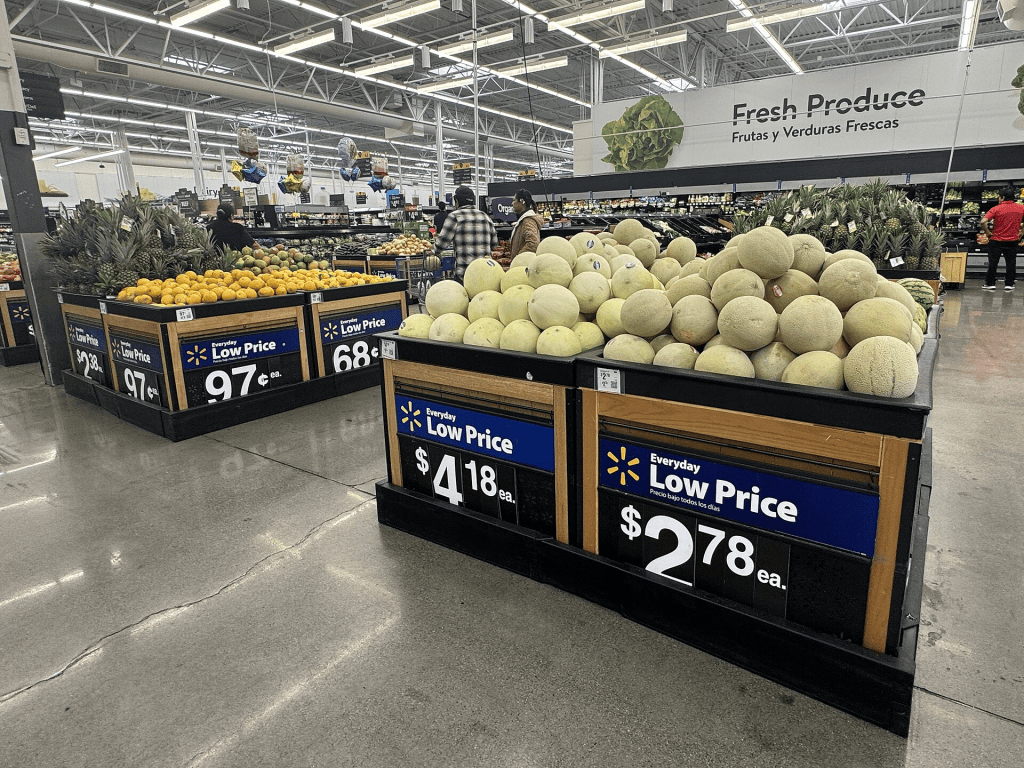
Another factor driving poor diet is the built environment of food consumption. While European consumers commonly use local grocers or food-specific stores, such as fish or meat markets, American consumers turn to large-scale supermarkets, which often offer a wider selection, including processed foods. Grocery stores are structured to encourage Americans to spend more time in stores, purchasing goods they do not need. Stores also place flashy displays at endcaps, which see the heaviest foot traffic, to catch the attention of shoppers. The use of eye-catching and dopamine-generating graphics to market processed food is one factor of its success; cost is another. Canned vegetables and processed fruit snacks are cheap alternatives to organic whole foods. The promotion of unhealthy processed foods via the centralization of food retail leads to poor choices for overall nutrition. When vegetables and meats sit on shelves right next to catchy signs advertising snacks and desserts, they struggle to gain the same attention or appeal. Together, these factors implicate an American population that has the ability to make healthier food choices, but does not, though they are not necessarily at fault.
The United States has been one of the world’s most dominant food producers by volume since World War II, with a refined agrarian economy supporting increased production year over year. The U.S. leads the world in production of chicken, corn, and almonds and produces one ton of vegetables per ten Americans. Despite leadership in “healthy” crops, the United States’ major products also consist of red meats, ingredients of processed foods, and dairy. Despite grocery stores pairing these options with fresh produce, lean meats, and fish, the pop culture diet wins the culture war. The quintessential components of the “American diet” portrayed in movies, like hot dogs and ice cream, are also seen in so many cultural events like neighborhood cookouts and sporting events. This is to say that in a nation with a surplus of domestic food production, including options recommended by the Dietary Guidelines for Americans (DGAs), the healthy choice is available in plenty, just overshadowed by the dopamine-driven unhealthy choices. Thus, America faces a dietary crisis with processed foods being the preferred alternative, mostly due to cost, marketing, and a lack of nutrition-based education.
Issues around the American Diet
Despite using many frameworks to promote healthy eating such as the New American Plate, U.S. government initiatives have largely failed to make widespread change. Because of the availability of unhealthy choices and the rising cost of whole foods, the decline of American health, apparent in healthcare spending, can be directly linked to poor diet. President Donald Trump’s administration implemented the Make America Healthy Again (MAHA) initiative, which drew from its predecessor, the National Strategy on Hunger, Nutrition, and Health from President Joe Biden. MAHA seeks to eliminate artificial food coloring and refine dietary recommendations to reflect a more holistic approach to eating centered around “real foods” like fruits, vegetables, and healthy fats. A key aspect of the idealized American diet is using a ‘holistic approach to eating’ from a diverse range of whole foods. This is often illustrated through the food pyramid, which has evolved into the food MyPlate and the DGAs. The former demonstrates an easy-to-interpret pictogram of the ideal quantities of each food group, whereas the latter defines more specific quantities of each food demanded by the body and their attributes such as macronutrients. These incredibly simple frameworks give an overview of good practices for diet, but fail to give more realistic instructions for meal prep and affordable eating habits. The absence of specificity leaves consumers with less awareness of what they are consuming and less agency over their own consumption.
With a seeming omnipresence of new food trends, Americans struggle to parse fact from fiction on whether these trends are actually healthy. The most recent, which centered around protein, saw brands like Pop-Tart introducing a “Pop-Tarts Protein” line that doubled the protein content of the breakfast snack. Many of these trendy high-protein foods are ultra-processed and have a negative impact on overall health and wellness. This obsession with protein comes from the American prioritization of healthy taglines or calories over the general health benefits of any one food. It was furthered by social media’s algorithmic push of buzzwords that have influenced the perception of food in society, especially among the youth.
The lack of awareness of micronutrients is not the fault of the American people. Rather, the blame falls on education policymakers who chose not to prioritize vitamins and minerals in nutrition curricula. The Centers for Disease Control and Prevention (CDC) states that U.S. students receive less than eight hours of nutrition instruction each year, significantly less than the advised amount for dietary-behavioral change. Collegiate nutritional ignorance is perpetuated by the use of dining halls on college campuses, which do not offer students the opportunity to “forage” for their meals, instead offering familiar options like pizza. Though nutrition is taught as part of an enrichment curriculum in middle and high school in the state of Texas, it receives a lack of time and attention. This lack of foundational knowledge leaves two major gaps. The first is ignorance of the functions of each macronutrient; understanding protein’s role in the body is just as important as understanding sugar’s immediate energy production. The second is the inability to evaluate foods from a nutritional standpoint rather than the marketed qualities on the side of the package.
Many children also see a disconnect between farms and the grocery store. While they understand that somewhere and someone grew their food, that connection between source and retail or animal and food is not obvious. Education is one step, but it is also important to understand the modern dynamics of farming. When looking at why American food has become so centralized, it is key to understand how American agriculture transitioned from small family farms to larger-scale operations. Though family farms still produce a majority of produce, many are family in name only. High acreage and corporate structures are needed to remain cost-competitive with agro-corporations that employ economies of scale to lower costs. Small farmers specifically have a major disadvantage: immense risk when deciding what to plant and how much, as consumer choice is unpredictable. For many Americans, especially those with more financial resources, dinner takes influence from home-cooked meals as a child, the food culture of their current city, and the region where they grew up. This tie to memories and heritage is not something that can be, nor should be, removed from consideration. Rather, it is important to keep the influence of culture while shifting to the most nutritious option. A specific example is fresh green beans, which are the same base food as green beans from a can, but have more nutrients. For many in the South, especially from low-income backgrounds, canned green beans were a dinner staple, and while the specific flavor is quite distinct from its fresh counterpart, the core ingredient is the same. Making this substitution would keep the cultural aspects of the food selection while substantially increasing nutritional value by adding vitamins C and K.
Compared to citizens of other developed nations, Americans visit the grocery store quite infrequently. Grocery trips occur on a weekly schedule. Trips to the store are made with the consideration that all purchases need to last the week, with preservatives as a common ingredient to maintain the necessary false freshness. As a direct contrast, Japanese consumers visit the grocery store near-daily, allowing for ingredients to be fresh, not needing week-long refrigeration. This daily process ensures that the nutritional value of the food is as high as possible and raises the expectation for quality. While many Americans may want to switch to support local vendors, the number of stops required to source food from separate locations is not feasible due to incompatible infrastructure. The location and architecture of grocery stores do not allow for the same type of connection-to-source seen with Japanese markets, or even European specialty stores. Bread markets are often run by the bakers who baked the loaves, and meat markets are often tended by the butchers who cut and wrapped the meats. American stores feature pre-packaged meats and wrapped sandwich bread, removing the element of connection with the craftsman. This separation by retail breaks apart the identity of the food as something that was once living, and reduces it to a marketable good. Globally, fresh food is expected to be decently colorful and vibrant, but not to the extent of America, where consumers purchase white sandwich bread bleached for brightness, or otherwise artificial additives to make food more appealing and “fresh”. These now marketable goods sacrifice nutrients and health but last longer on a shelf, allowing Americans to normalize the weekly grocery runs as their food has not yet gone bad. Another result of weekly grocery shopping is that 61% of the calories purchased from stores are highly processed, and another 15% are from only moderately processed foods. Note that this is not nutrients, such as protein and carbs, but pure calories, which are often higher in foods with added sugars and saturated fats. These unhealthy pseudo-macronutrients do contain high amounts of calories per gram, but lack the core vitamins and minerals that boost brain and body function and energy endurance.
Additionally, grocery stores are built around consumerism rather than the most cost-effective and nutrient-dense meal plan for their customers. Common items like milk and dairy live in the back of many stores, forcing customers to pass by enticing options. Even removing the catchy labels on cereal that promote “high fiber”, or on bread that advertise it as a “low calorie” food, these snack options are appealing due to their shelf life and affordability. Other stores create an implied pathway, encouraging shoppers to pass through each section of the store, including the bakery and sweets aisle, two hotspots for impulse purchases. In this way, grocery stores have become the antagonist of American health. While it is the responsibility of the American people to take agency over their food choices, the shopping environment should be supportive of healthy choices.
Policy Solutions
Three main policy solutions emerge from the issues above, which can spur directional change towards healthier choices by Americans with minimal change to their habits. The first is the creation of a semi-regulated wholesale market for small farms, with prices set by the governing authority at the locally competitive rate. Stores like Kroger and H-E-B that act as the retail intermediary between the wholesale market and general customers would be incentivized through tax credits proportional to the percent of total goods sold sourced through the small farms program, the same model that governments used to effectively cover wages during the COVID pandemic. In this system, the government would act as a market manager in a similar capacity to the Electric Reliability Council of Texas (ERCOT), an electricity system operator that sets rates based on local demand. ERCOT takes the total demand by consumers and calls upon generators to supply electricity, acting as an administrator for the wholesale market. In this case, food rates would be set by the market based on local produce rates by non-participants of the program, which include industrial-scale farms and national corporations. This alleviates the previously stated burden of consumer time, allowing shoppers to purchase local goods with no additional stops. Additionally, a new guaranteed source of income for farmers would enable demand forecasting and more efficient operations of their farms. Regulations such as private ownership would be mandated to avoid the loophole of shell companies by large agricultural corporations, and a system of legal filings would be necessary to protect small farmers.
In order to fill the cost burden incurred by a tax credit system to incentivize grocers to work with small farms, a source of revenue in the form of a tax would be recommended. For the second policy solution, a “junk-food tax” would pair with the cost scaling/reduction of healthy foods. Using previously established definitions for ultra-processed or high-sugar foods, the tax would seek to influence consumer behaviour and establish a positive feedback loop. By creating disincentives for unhealthy choices, consumers would be pushed towards nutrient-dense whole foods. Those who continue to purchase processed foods would be paying a tax, which would go into the fund that gives tax incentives for the small-farm-grocery wholesale market. Introducing small-farm goods at price parity would shift them from their current classification of luxury goods to normal goods accessible to nearly everyone. Increased demand for produce would in turn expand the quantity of goods on the market, and lower overall cost as big agriculture moves to lower prices to remain competitive. The quantity demanded would thus increase, and the economic effect of small farmers integrated into the market would be realized. Furthermore, the trap of grocery store marketing would be mitigated to an extent through the additional tax on processed impulse purchases, which previously were relatively inexpensive. Government initiatives like the Supplemental Nutrition Assistance Program (SNAP) would need to be amended to ensure that produce and fresh meats gain greater benefits over their canned/ground alternatives. Proper care would make SNAP and food stamps more effective at driving healthy eating, allowing these programs to better achieve their goals.
Food in America has long been a point of contention, not politically, but culturally. The divide between blue- and white-collar is just as much about what is on the dinner table as about status in the workplace. Thus, it should be noted that the point of the junk-food tax is not to price low-income families out of the food market, but rather to incentivize healthy options by setting up cost parity between healthy and unhealthy options. Equalizing the costs of processed and whole foods gives agency to all consumers, and sets up a system where choosing the processed option is intentional, not an economic necessity.
Junk food taxes have seen success in a multitude of countries from the G7 to the Global South. Colombia’s implementation of a ‘junk food tax’ saw declines in processed food consumption within the first year, which have continued through 2026. It is reported that the main opposition is from large food corporations, who have at-risk profit margins, over the consumers who were impacted fiscally. The United Kingdom also implemented a ‘junk food tax’ targeting foods high in fat, salt, or sugar (HFSS), which was paired with initiatives to lower the cost of healthy alternatives. Government research concluded that this lowered the disparity in health across socioeconomic classes. Within the United States, taxes have been levied on junk food by the Navajo Nation Council, which saw decreased rates of junk-food consumption and an increase in the supply of fruits and vegetables on the reservation. These examples show that despite controversy around the idea of a junk food tax and its impact on low-income individuals and families, they are largely successful at promoting health and local economies.
To address the issue of nutrition ignorance among Americans, work would need to be done in schools to arm the next generation with healthy eating habits, thus improving overall quality of life. In addition to implementing a nutrition curriculum as part of the sciences for middle and high schools, supplemental programs can provide experiential learning to cement dietary concepts. In 2015, the Texas Department of Agriculture implemented a program to connect schools with local farms to provide healthy food options for student lunches. Texas schools using the program saw higher rates of connection with local agriculture and lower waste than national averages, according to Commissioner Miller. All 50 states have a similar farm-to-school program in some capacity, but few are as robust or have seen such measured success as Texas’. The Texas Farm Fresh Initiative has seen success partnering with Let’s Get Growing garden-based learning programs. These programs pair K-12 students with on-campus gardens to learn about the gardening process and realize their work through produce that they can see is the same as what is found at the grocery store. This connection is crucial to building familiarity with fresh whole foods and encouraging healthy choices in the future. Instituting similar programs in urban areas would boost awareness around food quality and would create the crucial connection between the farm and the dinner plate. Connecting rural schools to their local farms could show how their gardening practices manifest themselves at a larger scale, and reinforce farming as a career opportunity at a time when so many rural youth look towards urban jobs for their futures.
Conclusion
As America passes its 250th anniversary and faces a complex political landscape, it is important for the longevity of the country to continue to support the health and wellness of the population. While food policy may not have historically received the flashy soundbites of partisan campaigns, it is crucial to support the public good through maintaining a healthy population. Healthier diets have direct links to lower healthcare spending, longer-living populations, and a thriving network of small farms which provide employment and land husbandry across rural America. Connecting education enables the next generation of Americans to make educated decisions around food, and modernizing farm-to-market solutions minimizes effort required from consumers. While these policy levers may already be in place to some capacity, it is the responsibility of the state and federal government to continue to support health and elevate farmers. For their part, the American people must take agency over their dietary choices to support both the agro-economy and their own health.
Categories: Culture


