
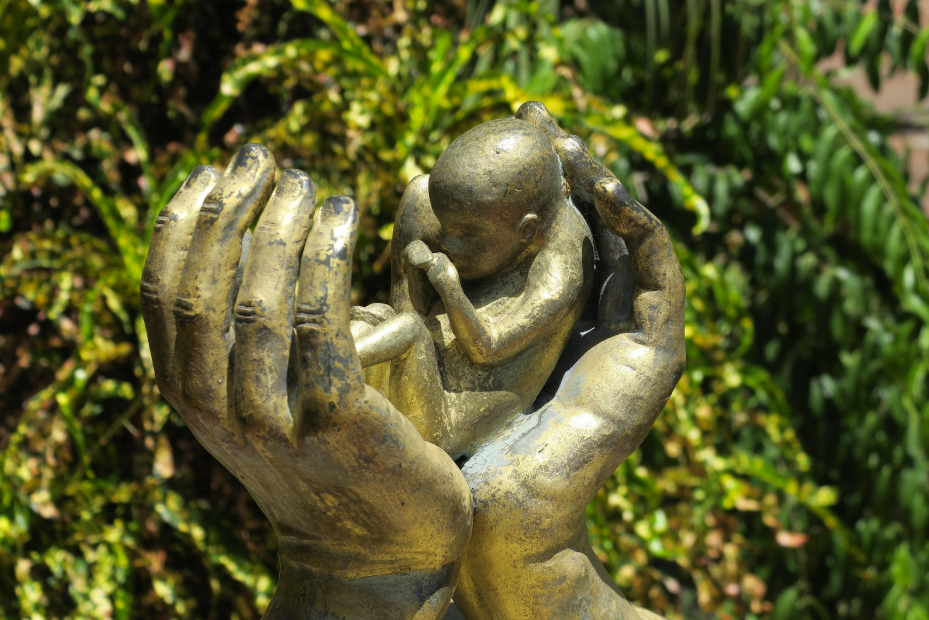
An amicus brief is a document written and submitted to a court by an individual or group that feels strongly about a certain case. The following, while not written in proper amicus brief format, is a similarly structured argument against the recent Dobbs v. Jackson Women’s Health Organization (2022) decision that overturned Roe v. Wade (1973) and Planned Parenthood of Southeastern Pennsylvania v. Casey (1992). The following hypothetical scenario seeks to uncover yet another way that the Dobbs decision was unconstitutional. Sally Sue, a Texas woman, decides to sue Texas for its abortion regulations. The argument relies on the idea that Dobbs violates the separation of church and state established under the First Amendment of the United States Constitution.
Introduction and Summary of Argument
A Texas woman named Sally Sue is suing Texas for its unjust abortion restrictions. She is a high-risk mother, with both a blood clotting disorder and high blood pressure, making it difficult for her to take medication to address her hypertension. She became pregnant, and at eighteen weeks, her doctors recommended she terminate the pregnancy due to her pre-existing medical conditions. Even so, they could not carry out the procedure in Texas as the only exception for termination is when the mother’s life is in immediate jeopardy. As a Jewish woman, Sue believes that while one should not actively seek an abortion, the life of the mother always comes first. She is suing on the grounds that abortion is protected in the Constitution under the First Amendment, specifically under the doctrine commonly known as the separation of church and state. The district court first ruled in favor of Texas to uphold the state law banning abortion. Sue then appealed to the United States Court of Appeals for the Fifth Circuit, which upheld the district court’s ruling. Now, she is appealing to the Supreme Court to argue the constitutionality of the abortion ban.
Dobbs v. Jackson Women’s Health Organization (2022) overturned Roe v. Wade (1973) and Planned Parenthood of Southeastern Pennsylvania v. Casey (1992) three years earlier, resulting in states determining the legality of abortion. A Mississippi law passed in 2018 called the “Gestational Age Act” made it illegal to perform nearly all abortions after fifteen weeks of pregnancy. Jackson Women’s Health Organization filed a lawsuit against the act, and the district court ruled in their favor, restricting Mississippi from enforcing the act. The United States Court for the Fifth Circuit affirmed this ruling, and the Supreme Court then took the case. There, a 6–3 ruling struck down the previous decisions protecting the right to abortion with the argument that abortion cannot be found in the Constitution. They also stated that overruling the previous precedent was reasonable because the earlier rulings short-circuited the democratic process, lacked evidence in history, could not be applied to cases of different circumstances, caused distortion in other areas of law, and would not cause any issues if it were to be overruled. The majority of the justices on the Court at the time were conservative. Justices Alito, Barrett, Gorsuch, Kavanaugh, Thomas, and Roberts collectively agreed that the right to an abortion is not found in the Constitution. Justices Breyer, Kagan, and Sotomayor dissented, arguing that abortion is a fundamental right, and that there is historical precedent for its protection. This ruling allowed states to ban abortion completely with very few exceptions, jeopardizing women’s health and their ability to choose the best option for themselves.
While the Justices only question Roe’s ruling in Dobbs, other cases hold similar importance in the context of this issue. As previously mentioned, the two abortion cases prior to Dobbs with the most impact were Roe and Casey. Casey limited the scope of the protections established in Roe. Since 1973, abortion has slowly become more restricted, as “. . .the current state of abortion politics generates pressure for conservative legal elites, including Justices and judges, to embrace structural preferentialism, which facilitates anti-abortion politics by allowing religious groups to legislate their views.” Court decisions have long grappled with the separation of church and state, just as they have with abortion. In recent years, landmark cases have set precedent that shape how we understand the intersection of religion and politics. These cases draw a distinction that allows individuals to practice their own religion, but not to force their religion upon others.
Many conservative justices subscribe to this ideology and frequently apply textual originalism as the interpretive method when ruling on such matters. While the Court still largely consists of the same judges as were present in Dobbs, Justice Jackson replaced Justice Breyer. Still, both justices lean towards judicial activism and the protection of reproductive rights, ultimately not resulting in a major difference in the composition of the Court. If the justices were to re-examine Dobbs citing their interpretations of the First Amendment, they would likely overturn the previous decision.
The circumstances above exemplify why Dobbs v. Jackson Women’s Health Organization (2022) should be struck down. By violating the First Amendment, Dobbs takes away women’s choice to exercise their religious views, and in turn harms women who may not have access to abortion. The ban is of specific interest of amici, or the third-party individual submitting this argument, as it fails to withstand the constitutional protection of the separation of church and state as established in the First Amendment’s Establishment Clause and Free Exercise Clause. Amici urges the Court to protect the right to abortion and to keep the states from determining the actions of its occupants based on certain religious views.
Application of Separation of Church and State in Abortion
Together in the First Amendment, the Establishment Clause and the Free Exercise Clause establish the separation of church and state. The clauses state that “Congress shall make no law respecting an establishment of religion, or prohibiting the free exercise thereof.” The Establishment Clause prevents the formation of a dominant religion in the United States, while the Free Exercise Clause prohibits restrictions on one’s religious practices as long as they cause no public threat. The Framers created these clauses to keep the United States from being governed similarly to Britain, where the church was a means in which the government could control public opinion. However, the clauses have evolved to protect individualism and religious freedom. People often read abortion through a religious framework, even though it is a moral issue that extends well beyond religion. As such, one should not be compelled to act against their own personal conviction by federal or state mandates.
Charged rhetoric about abortion has taken over the conversation about its constitutionality, shaping public opinion and the legal decisions that follow. An ample amount of anti-abortion rhetoric stems from religion, specifically in the conservative Christian movement. For example, many people construe the Bible to state that life starts at conception and that any abortion after that point is murder. Additionally, certain religious people in power push specific cut-offs for abortion not based on science, but rather arbitrary ideas about when a fetus is alive. One of these religion-based statutes is Missouri’s abortion ban. In the “Right to Life of the Unborn Child Act,” Missouri states that “In recognition that Almighty God is the author of life, that all men and women are ‘endowed by their Creator with certain unalienable Rights, that among these are Life.’” The inclusion of religious speech is unconstitutional. Imposing certain religious beliefs onto others and forcing them to comply violates the Establishment Clause.
While Missouri is only one state of many where religion plays a role in its abortion policies, it is important to remember that Dobbs’ overturning of Roe and Casey allows this to continue in other states. States can impose unconstitutional restrictions on abortion that violate the First Amendment because there is no federal protection of abortion. Another example related to the case regarding Sally Sue is Texas’ “Heartbeat Act.” This bill was in effect before the overturning of Roe, allowing for laws restricting abortion to immediately go into effect. The bill restricted abortions to before the detection of a fetal heartbeat, usually interpreted to be at about six weeks. While this sounds like a reasonable limitation based on science, the supposed heartbeat heard is actually the throbbing of human embryo tissues that have not yet formed a heart. The conflation of this phenomena with a heartbeat is misleading and brings in the moral question of when a human being is truly alive.
Religious beliefs often guide one to the answer of that question. Instead of basing this decision on facts such as those required to create legislation, the authors of the bill used their own moral ideology to choose when to limit abortion. Moral convictions are often intertwined with politics, but they should not be based on beliefs that vary drastically based on different religions. A similar bill was passed in Oklahoma, and the president pro tempore of the State Senate stated: “All life is precious and a gift from God.” The prevalence of anti-abortion bills with religious rhetoric continues in several other states. One of the arguments presented during a debate of an abortion law in Mississippi was that “children are a gift from God.” When an Alabama governor “signed a bill in 2019 to make almost all abortions punishable as felonies, she explained that the new law ‘stands as a powerful testament to Alabamians’ deeply held belief that every life is precious and that every life is a sacred gift from God.’”
There is a clear correlation between conservative states with deeply held “traditional” religious views and the implementation of these policies. After Dobbs, these policies banned abortion in those areas all together. This implementation of a specific religious belief into law not only violates the Establishment Clause, but also the Free Exercise Clause. It restricts the ability of women to practice their own beliefs about abortion depending on their religion, or lack of. Overturning Dobbs and reinstating federal protection for abortion would effectively give women the autonomy needed to dictate their religious practices.
Why the Separation of Church and State in Abortion is Important
Establishing a national religion has not been a prime issue in recent years, so the use of these clauses has become more about individuals. Many companies and individuals have used both clauses to argue cases in which certain people wanted to be excluded from certain laws as they did not align with their religious beliefs. Some of these cases included arguments that the separation of church and state protects their freedom from one religious ideology, as well as freedom to practice their religion of choice. This interpretation of the First Amendment not only benefits those from minority religions, but also those from major religions. Stores, schools, and small businesses have kept their freedom to practice religion as they wish through exemptions from certain legal expectations. In Burwell v. Hobby Lobby Stores, Inc. (2014), the Court ruled that religious stores could refrain from providing contraceptive care. This not only upheld the separation of church and state, but also intertwined reproductive healthcare choices with religion.
This exemption of certain corporations from government rules is only protected as “In all these cases, courts or agencies came to the conclusion that religious exercise could be accommodated with little or no harm to the public interest or to others.” The right to abortion falls within allowing the choice of whether or not to engage in certain practices. While the differentiator between allowed exemptions and not allowed is if it causes harm to the public, restricting the choice of abortion unduly harms women. For this reason, instead of gaining exemption from certain laws, women should be able to choose for themselves whether to have an abortion. Abortion’s effects on women’s health can vary based on their socioeconomic status as well as region of living. Negative effects based on this factor can include physical health issues such as sepsis, high blood pressure, and diabetes, as well as mental health issues. While these do not seem directly tied to religion, imposing a certain religious view affects all women, not just those who subscribe to those specific religious morals. Forcing women to act on one viewpoint that may cause harm is clearly a violation of the First Amendment.
Attitudes toward abortion can vary based on religious practice. Enforcing one set of beliefs through these restrictions diminishes the freedom of religious practice in states where abortion is restricted. While some religions may wish to limit access to abortion, other religions may not view life as starting at certain points during pregnancy, or may have exceptions to their beliefs to protect the mother. Judaism, which Sally Sue practices, states that “Traditional Jewish teachings view abortion as permissible and even as required when abortion is necessary to safeguard the well-being of the mother, at any stage of pregnancy.” Not allowing her to practice her own religious belief on abortion violates her rights established in the Free Exercise Clause. Other religions also have similar views, including Islam, where several schools of thought permit abortion up to 19-20 weeks of gestation, and Buddhism where women are tasked with making the decision for themselves. Even further, many people do not believe in religion at all, and solely follow the advice of medical professionals for when an abortion should no longer be allowed. The limitations on individuals’ actions reduces the ability for different religions and views to be practiced without repercussion. Overturning Dobbs and reinstating Roe would protect the ability of individuals to make their own choices on the matter, rather than states making the choice for them.
Roe established abortion as a constitutional right that the federal government protected. The Court created a structure using the trimester framework to determine when a state could impose restrictions on abortion. Nineteen years later, the Court during Casey upheld the right to abortion as established in Roe. In doing so, they established the viability standard for when states could step in to place restrictions rather than the trimester framework. This new framework allowed states to restrict abortion as they saw fit only after the federally protected time allotment ended. The citizens of each state could vote to broaden or restrict access to abortion. Voting allows for the people to choose their laws while still protecting the religious liberty for women in the minority of their state’s politics to choose up until viability. It helps avoid conflict over deeply religious decisions, and insulates “some of the most contentious and inherently religious matters against the assaults on conscience that come with political control.” Protecting the right of individuals to practice their choice of religion and their beliefs within it is especially important when pertaining to controversial decisions. Upholding the separation of church and state in the issue of abortion is crucial to protecting religious freedom.
Conclusion
Allowing for state governments to completely ban abortion takes away individuals’ right to make choices in regards to their religious views. Not only has the topic of abortion been prevalent in recent legislation and courts, but the separation of church and state has been as well. In Kennedy v. Bremerton School District (2022), a case about a coach praying on a football field with his players that was ruled the same year as Dobbs, the Supreme Court ruled that “the Constitution neither mandates nor permits the government to suppress such religious expression.” This ruling demonstrates that the Court is explicitly concerned with protecting individuals’ right to express their religious beliefs. The Court is already making distinctions about when the separation of church and state should apply. It is crucial that this also protects a woman’s right to choose an abortion. Forcing women to comply with laws based on religion, as in Dobbs, violates the First Amendment’s Establishment Clause as well as its Free Exercise Clause. The Court should overturn Dobbs to reinstate Roe and Casey to reestablish abortion as a federally protected right.
Categories: Domestic Affairs

 The Texas Orator