
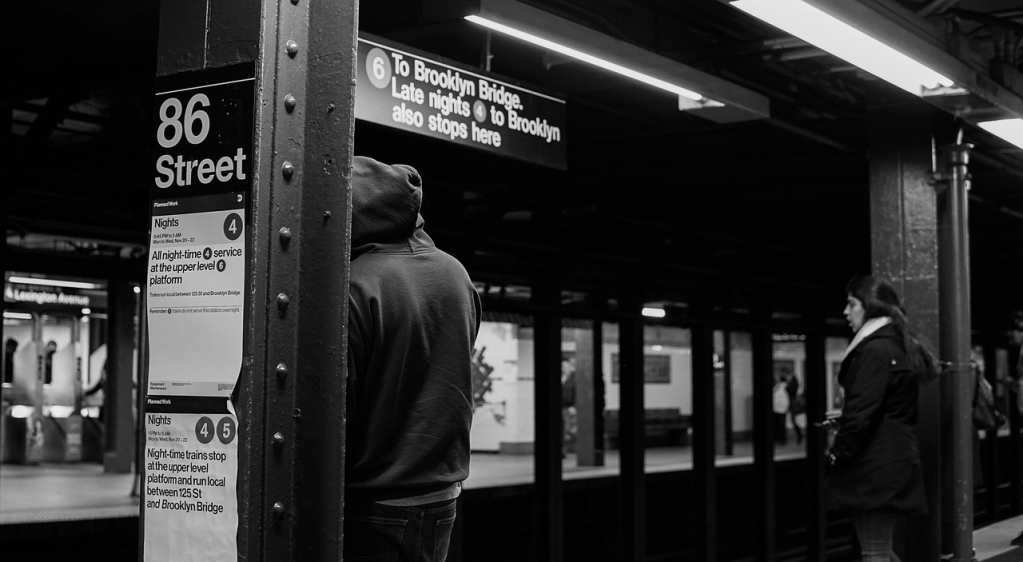
Public transit is often hailed as one of the great pillars of progressivism. It promises equitable access to mobility regardless of income, spurs dense urban development that cuts down sprawl, and is among the most environmentally sustainable forms of transportation available. In nearly every other developed country, these promises have been realized with efficient and clean systems that carry millions of people each day. By contrast, America’s transit systems lag far behind. Why?
There are many issues facing the expansion of public transit in America, but the main reason is that ridership, and thus return on investment, is some of the lowest in the world. Why is this the case? Fares can be expensive and limit the financial upside of not having a car. Furthermore, it can be unreliable, or not travel to the places where people want to go. Despite these problems, I believe the main issues facing public transit in the U.S. are intangible factors driven by human emotion: more specifically, that public transit feels dirty and unsafe. To prove this, let’s imagine a world in which the other problems don’t exist and look at our own UT Austin campus:
For us students, fares are free. Buses on Guadalupe Street are frequent, sometimes running every four minutes, though inconsistent scheduling, unexpected delays, and slow frequency after peak times can harm ridership. Their service patterns are relatively convenient as well: pretty much any place a student could want to go in the city is accessible by a 20–30 minute ride.
Despite this, many students choose to take anything but the bus, whether that be Uber, Fetii, or Lime, to travel around the city. When I ask them why, their answer always points to the homeless population, with some of my friends having experienced verbal harassment or physical intimidation. It’s worth pointing out that the true danger of these homeless people could be debated, but so long as they damage the perception of safety on public transit, they will hurt ridership for people that would use it otherwise.
I want to set the record straight that I am not just another suburbanite complaining about a city because it is dirty. My home in Richmond, Virginia is five minutes from downtown, and I am well-versed in public transit both there and around the rest of America from personal experience. I also used to live abroad in Southeast Asia, and needless to say, homeless people don’t bother me at all—that is not why I am writing this. But as it stands in America, public transit typically serves two kinds of people: the people who have no other choice but to use it, or the people who aren’t frightened enough by homeless people to care—I fall into this second category. Unfortunately, this population is not exceptionally large or inclusive, so if we want to grow public transit ridership, we need to expand its appeal to others who may not fall into the two aforementioned categories, including—gasp—suburbanites who are concerned with the safety of cities.
Public transit advocates, who overwhelmingly lean progressive, will often point to other countries like France or Japan and ask, “Why don’t we have public transit like them, especially when we are wealthier?!” I completely agree. We deserve to have public transit just as good as countries abroad. Despite this, what uniquely separates American public transit from every other public transit system in the world (minus Canada) is the issue of homelessness plaguing the riding experience. Even more of a problem is that the biggest obstacles to keeping homeless people out of the subway system are often the same progressives who advocate for public transit in the first place.
Here’s a little anecdote to demonstrate this: New York is one of the densest cities in the world, and probably the only city in the U.S. to rival public transit in Europe and Asia from a coverage and frequency perspective. Yet, riding the New York subway is a terrible experience. I remember riding only one stop on the 7 line from Penn Station to the brand-new Hudson Yards station. First, I almost sat in a literal pile of shit on the wooden bench in Penn Station. Once on the subway, it stank of weed, and opposite from where I was sitting, a man was yelling to the heavens the entire time. Upon exiting, I was confronted with the stench of piss as I left a brand-new, multi-billion dollar subway station. And people wonder why ridership for the MTA struggled to recover from the pandemic.
Go anywhere else in the world, and this does not happen. In Singapore, Tokyo, and Hong Kong, where millions of people ride the subway every day, the trains and stations are not only absent of homeless people, they are pristine. Even Paris, a fairly dirty city even by American standards with its own—albeit smaller—homeless population, does not have these issues on its public transit.
To contend with the aforementioned homelessness problem in NYC, New York Governor Kathy Hochul sent National Guard and state police into the subways to enforce fare payments and increase security. That program is still in place, and ridership is up 148% since 2021, but that didn’t stop the city’s progressives from being critical.
A spokesman for the Legal Defense Fund (LDF), a progressive, NAACP-backed legal advocacy group, argued that “to achieve real safety, we need proven methods like community investments that will promote the health and economic well-being of residents, instead of surveillance and harassment from law enforcement and military personnel. We strongly urge Governor Hochul to reconsider this dangerous and ill-conceived plan.”
It’s worth considering, of course, that the LDF’s “proven methods” were the cause of the failure in the first place, under a program dubbed the “Subway Safety Plan.” As part of that initiative, social workers made 24,000 encounters with New Yorkers sleeping on trains in a single year, and over 80% of the time, their help was rebuffed, according to New York Daily News. But sure, let’s keep pretending that politely asking drug addicts to stop interfering with public spaces will work.
A spokesperson for the Legal Aid Society, another progressive non-profit, commented that “[subway riders] want a subway system that fully functions, not wrongheaded policies that perpetuate invasive police searches… New Yorkers don’t want their morning commute turned into some dystopia, and Governor Hochul should immediately rescind this plan in favor of meaningful investments into social safety nets.”
Let’s ignore the fact that in 2024, NYC spent $3.96 billion on funding their Department of Homeless Services—that’s more than the entire GDP of 32 countries. What do riders actually want in their subway systems? I believe riders want world-class public transit, and safety and cleanliness have to be a part of that. Having homeless people sleeping in the subway or peeing in the stations is directly contrary to this goal.
Many critics will rightly argue that keeping homeless people from the subway does not solve the problem of homelessness. That is correct, but I am not trying to solve the issue of homelessness. I am trying to solve the issue of America’s failing public transit. I’ll also add that clearing out homeless encampments in cities without adequate shelters is wrong, despite attempts by some contemporary mayors to do just that. There is a difference, however, between homeless encampments and people sleeping in public transit: public transit is inherently meant for everyone, and its quality shouldn’t be jeopardized by a small minority. Public transit, by nature, forces proximity between individuals. When homeless people, especially those struggling with addiction, are present in that ecosystem, they are often very close and very disruptive to many regular people trying to live their lives.
I’ll admit that preventing homeless individuals from loitering in stations and sleeping on trains sounds draconian, but it is common practice in much of the world. In Asian nations, where public transit ridership is the highest in the world, vagrancy, loitering, and begging are all strictly prohibited and laws are enforced as such. This includes public transit systems in the Middle East, India, Japan, and Singapore. Also worth noting is that many European countries and cities, such as Hungary, Berlin, and London, have laws on the books to prevent loitering and public disruptions in transit systems. In this way, adopting enforcement-centered legislation would be more of catching up to our contemporaries.
Of course, in a perfect world, there wouldn’t be any homelessness at all. Working towards this goal is noble, however it is naive to think this issue will be solved in the near future. But while we wait for effective governance to resolve affordable housing and substance abuse, must we also wait to beautify our public transit? If this is to be the case, we consign public transit to its current state for potentially decades into the future.
After all, it should not be the job of public transit systems to both deal with homelessness and provide service to everyone else. They should focus their limited resources into improving service quality and frequency, not cleaning up pee on the station floor. They sure as hell shouldn’t have to deal with the legal fallout of a young woman being pushed into a moving subway by a mentally ill individual.
One thing that fascinates me about the issue of homelessness is how such a small segment of urban populations can have such a large impact on the quality of life. By refusing to enforce a high standard of public order on our public transit, we let a small fraction of society ruin everyone else’s chances of living in a sustainable, car-free urban environment. It’s time for compromise. Bringing cleanliness and safety to public transit is how progressives can drum up support to build more equitable, more ambitious public transit projects in the future—whether that be in Austin, New York, or anywhere else.
Categories: Domestic Affairs

 The Texas Orator