
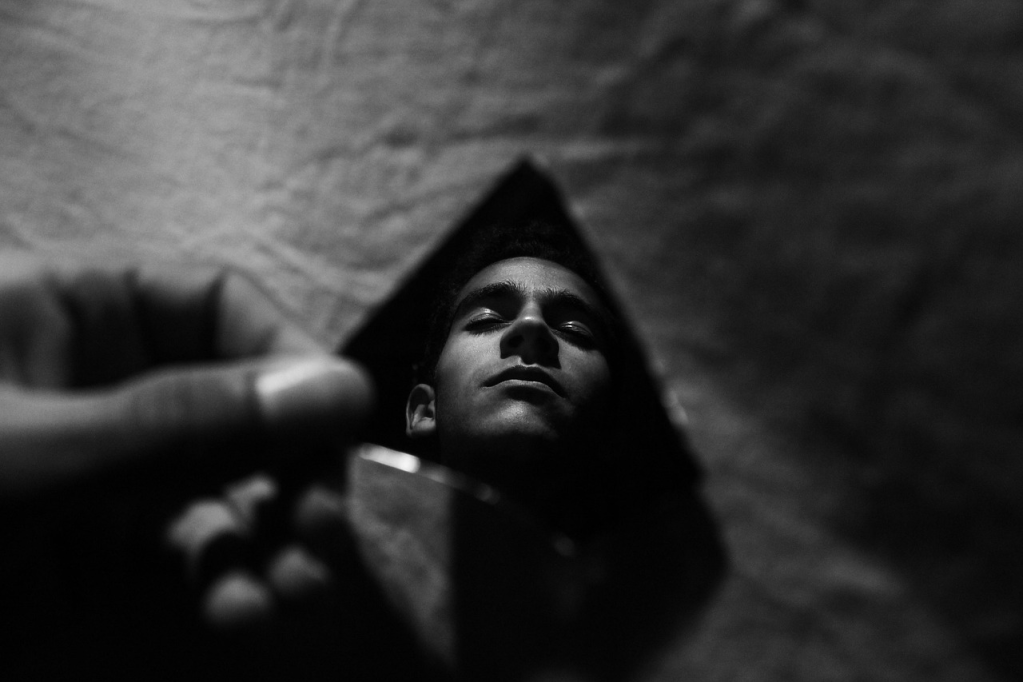
As I walk down the street, I make sure my heels strike the pavement just right. Each click is calculated. Each click announces: I am here. The sound alone intimidates. Confidence. Power. Manufactured, but convincing. My hair bounces in rhythm, catching the light like it knows the script. The rest of me stays composed. My face never betrays the effort behind the picture-perfect scene. By the time I reach the end of my runway, waiting for the crosswalk’s indifferent flash, I think, “When did living become performing?”
Self-focus is a drug. It’s sweet, addictive, and slow-killing. We have all been poisoned. Modern culture has taught us to narrate our own existence from the outside—to see ourselves as content, angles, filters, and versions.
We perform kindness until it feels fake. We express opinions until they’re labeled unbearable. We shrink, we expand, we distort. Always too much or never enough. We have been raised to polish ourselves into reflections instead of realities. Somewhere between the click of the heel and the bounce of the hair, we forgot how to live.
As a society, we live under constant surveillance not just by others, but by ourselves. We have learned to monitor our every move, to observe instead of occupy. Every smile, every word, every outfit becomes evidence of who we think we should be.
Social media has become the most efficient dealer of this self-focused drug. It feeds our need for validation in microdoses, such as in likes, follows, and shares. They act as tiny bursts of dopamine. We calibrate our worth with numbers that mean nothing and everything.
The numbers on your social media platform define you. They decide how many friends you have. They determine your aesthetic. They define whether your life is interesting enough to follow. The numbers are addictive.
When your numbers rise, you feel a satisfaction that hums beneath your skin. A chemical reward, a hit of relevance. The design of social media triggers our brain’s reward system, the numbers functioning as digital rewards that activate dopamine as they grow. Gradually, we become addicted to the prison of measuring our self-worth through another’s perception.
Whenever the numbers stop rising, the crash follows, and you spiral. This endless need for visibility breeds anxiety and erodes self-esteem, particularly in young adults. The numbers consume us because we have built a world where identity depends on visibility such that invisibility feels like death.
There is consequential tension in constant self-awareness. People hesitate to act, speak, or even wear certain things out of fear of judgment. By living in the third person, we forgo genuine connection and expression. And, as a result, we trade authenticity for acceptance.
Therefore, truly living requires losing some self-awareness and refusing the drug. Young children, for instance, run without rhythm, speak without script, and laugh without shame. They exist entirely in the moment, untouched by the pressure to be perceived.
Somewhere between childhood and adulthood, we learned to trade that freedom for presentation. Adolescent authenticity declines when children begin to experience external pressures, surveillance, and self-monitoring. Children are less burdened by a “performance” mindset.
It is crucial to remember those rare moments when perception did not overwhelm joy, when we were too busy living to notice how we looked doing it. Despite the burdens of adulthood, we must make a conscious effort to release control and exist freely.
So, do we think too much about ourselves? Absolutely. To truly live, we must let go and stop trying to see ourselves through another’s eyes. We must learn to misstep the rhythm of the heel, to let our hair fall out of place, to speak and move with boldness rather than calculation. We must forget who is watching and finally, simply, live.
Categories: Culture

 The Texas Orator