
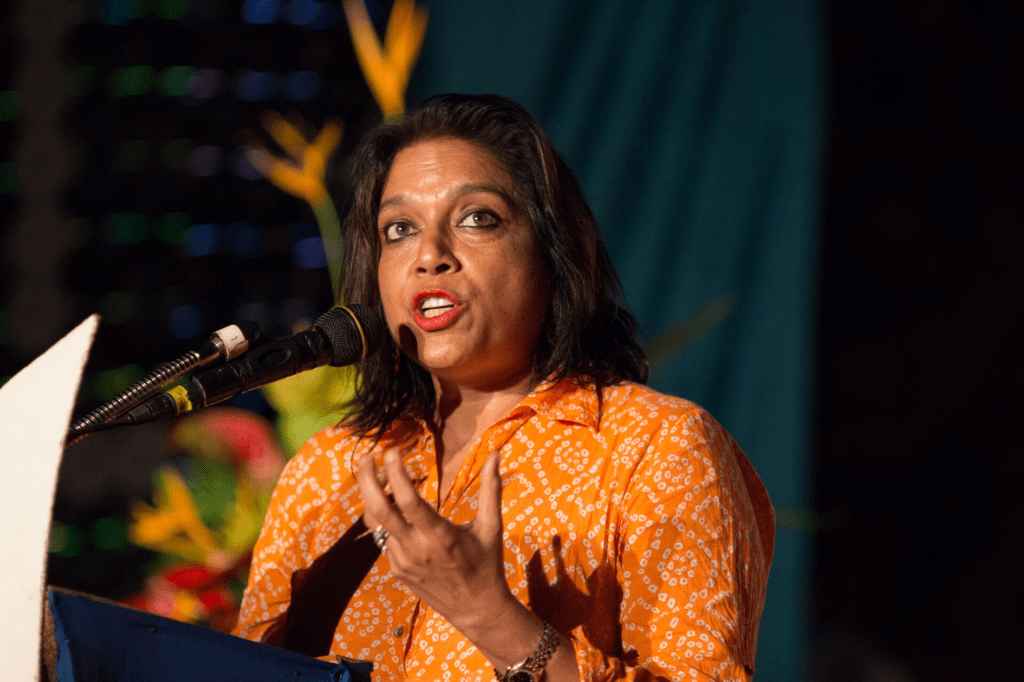
When Zohran Mamdani walked onto the stage on election night and pumped his fist beside his filmmaker mother, Mira Nair, the moment felt like a scene from one of her films. A son, a cheering crowd, and an immigrant’s story in the heart of the city. But this wasn’t fiction. It was real life, with New York’s mayor-elect celebrating a victory that’s been lauded as generational. And beside him was Mira Nair, one of the most famous filmmakers of her time. Her presence at the center of that celebration made perfect sense. Nair’s entire career has focused on stories about migration, family, and the beautiful messiness of multicultural cities, themes that are reflected in her son’s politics and public image.
Nair was born in Rourkela, a city in the eastern Indian state of Odisha. She studied at Harvard and began her filmmaking journey with theater and documentaries. Her early film Salaam Bombay! earned international acclaim and set the tone for a career that balances the personal and the political. Over the years, she’s made films like Mississippi Masala, Monsoon Wedding, and The Namesake, which explore how private lives are shaped by history and how people build roots across continents. She employs a style of filmmaking that is exuberant but politically aware, combining visual creativity with a vested interest in social issues.
Mamdani, a democratic socialist, grew up in a home where global stories were everyday language. His father, scholar Mahmood Mamdani, built a career around postcolonial critiques and civic engagement. That environment sparked an approach to public life that valued equity and historical awareness. Zohran’s campaign mixed personal storytelling with policy proposals for affordable housing, public transit, and social services.
The images from election night, Nair in a vibrant green and blue saree, smiling proudly beside her son, represented more than just a typical proud mother. A woman born in India who built an international career, was standing next to her son, now the leader of one of the world’s biggest cities. But the connection between Nair’s films and her son’s politics runs deeper than appearances. Much of Nair’s work has always asked tough questions about power. Who holds it, who is left out, and how communities imagine fairness and justice.
Her film Monsoon Wedding isn’t just a romantic comedy about an arranged marriage; it’s also a film about class, shame, migration, and the lingering effects of colonialism. The Namesake explores the quiet struggles and tender negotiations of immigrant identity. These themes, inequality, dignity, and the importance of responsive institutions, likely shaped conversations in the Mamdani household and influenced the moral perspective behind Zohran’s campaign.
Nair has always blurred the line between art and activism. She founded the Salaam Baalak Trust for street children and the Maisha Film Lab in East Africa, both of which focus on storytelling as a tool for social change. Her public image has never been about detached artistic mystique but about direct engagement with the world. She sees storytelling as a civic act. That purpose—using art and culture to expand who gets to be seen and heard—aligns with the kind of politics Mamdani campaigned on: grassroots, visible, and centered on access and inclusion.
There’s also a wider political backdrop to all of this. Mamdani’s win marked a turning point in New York politics. He is one of the youngest mayors in the city’s history and its first South Asian and Muslim mayor. That shift has been met with both excitement and skepticism. Immigrant communities and progressives celebrated, while critics questioned his experience and international stances. For Nair, this is a moment. Her films have always asked audiences to embrace that kind of gradation, to hold joy and injustice in the same frame. As her son steps into leadership, that balance between optimism and realism will shape their ongoing story.
What comes next is uncertain. Mira Nair has built her career helping audiences see one another as fully human. However, for Nair, the focus right now is undoubtedly the pride of seeing her son take on public office. But the significance of his victory cuts deep. It speaks to immigrant stories, to the cultural forces that shape new generations of leaders, and to how art and politics overlap. Now, standing onstage as the mother of a mayor, she’s become part of that very story.
Our world craves simplicity. Nair’s life and work resist this easy summary. She has always balanced continents, mediums, and moral questions. Her son’s victory gives that balancing act a new spotlight. If her films have taught us anything, it’s that the personal and political are intertwined. Policy debates happen in living rooms and rehearsal spaces, and the politics of a city are often rooted in the stories of families. The Mamdani-Nair moment isn’t a sudden twist but a continuation of the story Mira Nair has been telling for decades. When people are truly seen and heard, cities—like films—become more honest and human.
Categories: Culture

 The Texas Orator