
In a time where members of Congress eschew civility and decorum in favor of political pontification, the civic climate today is one of the most polarized in American history. We have reached a level of polarization that is second only to the era of the Civil War. A growing lack of enthusiasm for selfless public service among Americans, particularly young Americans, may be the reason. The era of Jack Kennedy’s Call to Service is long gone. Instead, it has been replaced by a Randian-style encouragement of self-interest where altruism and public service for the sake of unrequited societal good are inconceivable to the average American.
Whether it be for God, country, those in need or otherwise, I was raised with the ideal that there is no higher calling than selfless servitude. Not every generous action needs a commensurate reward. Doing good for no other reason than to spread that good is an all too rare value. Many Americans were raised the same way, yet it appears that view has come to a sudden halt. If there is anything to take away from recent election trends and political rhetoric, it is that Americans have grown increasingly self-interested and apathetic to the servant attitudes that once spurred idealistic men and women to serve mankind.
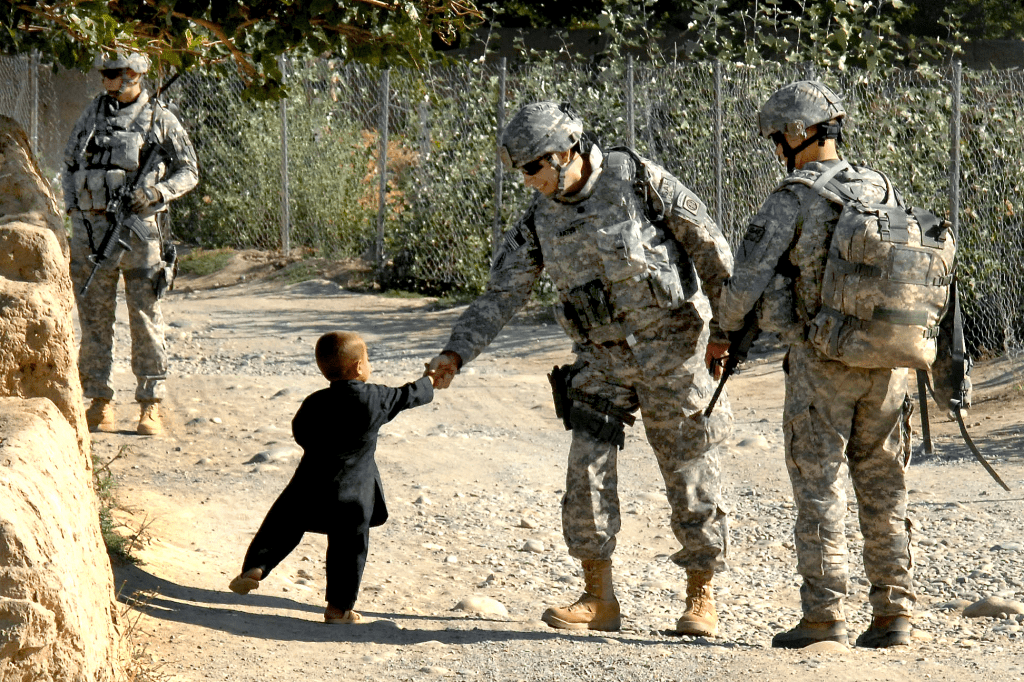
The data surrounding young people’s view of military service is the clearest example of the waning positive attitudes toward public servitude. As of 2022, only a shocking 23% of young Americans are qualified to serve in the military. With the exception of a small percentage of disqualifications arising from mental health concerns and physical impairments, this incredibly low percentage of eligible Americans is largely due to self-imposed obstacles such as obesity, criminal history, and drug use. However, the true disinclination to serve the country lies in one crucial statistic: only 9% of that eligible 23% has the desire to serve. As a direct result of the aversion, the Army only hit 75% of active duty recruiting goals in 2022 and 2023, while just barely reaching their goal in 2024. Reserve Army goals routinely fell short to a greater extent as well.
Unfortunately, military service is not the only sector of civic virtue that is deficient in American attitudes. The reality is that the United States is lacking a sufficiently altruistic public. A joint survey conducted by the Census Bureau and AmeriCorps found that less than 30% of Americans over the age of 16 volunteered formally at least once in 2024—an improvement from years past. A civic vitality that is considered to be rising should never be this low. The act of formally volunteering just once can take as little as a few hours from one day in a year. The middle class and upper class make up 70% of the nation’s population. Thus, accounting for exceptions to the rule, about 70% of Americans have the capability to spare at least a few hours in a year to help those in need. They choose against it, even as the wealth concentrated in the upper class grows. Less than 30% is an embarrassing metric for the most prosperous country in the world.
The most unfortunate result of selfishness is the failure to see how public service may help the servant, too. Recent political rhetoric has shifted American society into a mindset of “not my problem,” which is unhelpful at best and perilous at worst. A kind act should not expect a reward, however, many who formally volunteer have seen returns that propel their careers forward. AmeriCorps data best displays this mutually beneficial effort. A 2017 study found that 79% of AmeriCorps alumni were planning to become active members of their community, a 32% jump from the 47% prior to the service. 80% said that they were better equipped for their desired career path following service. The most crucial to civic health? 94% of alumni said that they were registered to vote, significantly surpassing the national totals. The numbers speak for themselves.
Selfishness is easy. Caring about your own interests above all at the disregard of the greater good is incentivized in a society hell bent on propagating personal benefit over self-sacrifice. It is easy to think “I have a comfortable life with enough money for my family and no worries about the possibility of tonight’s meal, so why should I bother joining the military or joining AmeriCorps or volunteering at my local Church or foodbank? The disadvantaged can help themselves.” What is easy is rarely what is best. The difficult path is many times the most beneficial. Service is no different. Taking time out of your day and shifting from leisure to service is difficult. In this case, as in most cases, the difficult action is the necessary action.
Public service is a declining ideal that must be corrected swiftly and urgently. The country as a whole, from the individual to the collective, benefits from a healthy civic virtue throughout the nation. The responsibility falls on each service-oriented American. We all must do a better job educating the public on the realities of selfless action. Whether it be military service, volunteering, or another form of altruism, the public must better understand the pros and cons. The positives of service far outweigh the negatives, but if we allow selfish rhetoric to dictate the discourse, the general public will continue to slide toward a self-interested, “me first and me only” dystopia in every facet of life. It has infected our politics. We must be careful lest it infect further spheres of public life. In a world of selfishness, choose servitude. Please do your part. Please serve.
Categories: Domestic Affairs

 The Texas Orator