
The General Issue
The influx of migrants from the Middle East is one of the defining humanitarian challenges of our time. Socially, economically and politically, the flow of people seeking a better life has had profound implications for the future of Europe. This mass migration has resulted in a ballooning Muslim population in Europe and clashes between two distinct cultures. These disputes have resulted in repercussions across the socioeconomic and political landscape of Europe that continue to be felt nearly a decade after the crisis began.
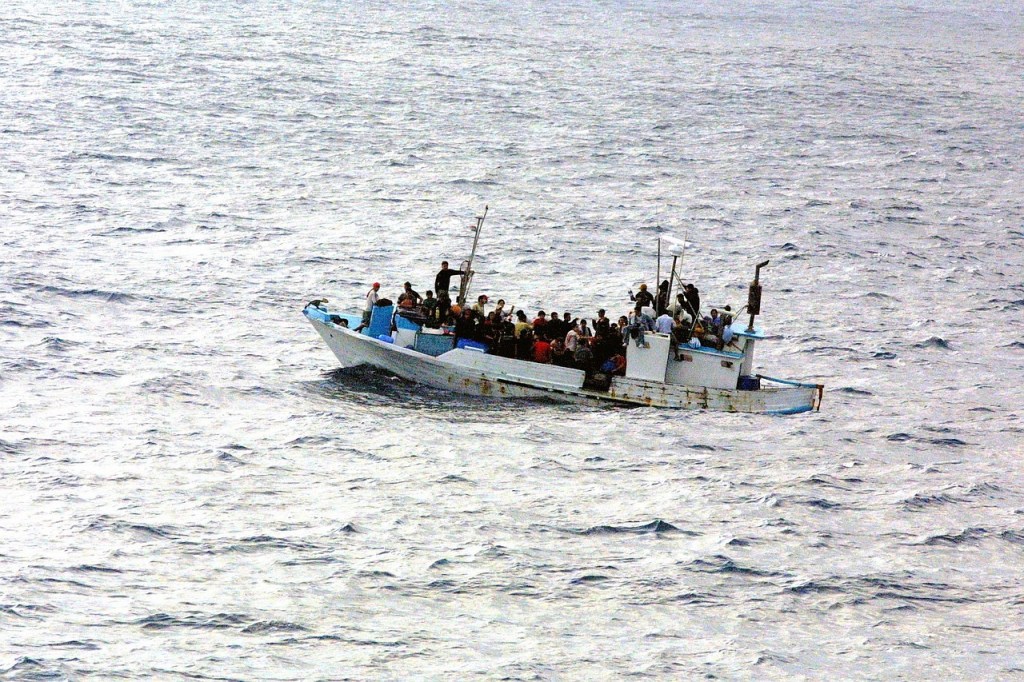
At the height of the migrant crisis in 2015, more than 1.3 million people sought asylum in Europe according to the Pew Research Center. Most of these asylum seekers were from the Middle East, with half comprised of Iraqis, Syrians and Afghanis fleeing war and violence in their home countries. Migration today is still extremely prevalent though with 135,000 migrants disembarking in Italy alone between June 2022 and March 2023. As a result of this flow, the Muslim population of Europe has drastically increased by nearly 6% between 2010 and 2020. In order to reach the shores of southern Europe, the vast majority of migrants travel through the rough waters of the Mediterranean Sea. Many times these migrants are forced to pay human smugglers an exorbitant amount, often their entire life’s savings to make these crossings. These smugglers view migrants as nothing more than cargo and have little regard for their lives or safety. As a result, an estimated 26,000 migrants have died in the frigid Mediterranean waters since 2014. Meanwhile, these smugglers operating between Africa and Europe are projected to make 150 million dollars annually. This human smuggling market has been instrumental in the surge of migrants arriving in Europe and has put great strain on the processing and support systems of European countries. Refugee camps in Greece, where the majority of migrants are routed to, have become overcrowded and migrants often spend months or years in squalid conditions in the camps while awaiting a decision on their asylum application.
The Root Causes
The ultimate driving force behind this migrant surge has been war and devastation that has defined the history of the Middle East for much of the 21st century. The Syrian Civil War, the rise and fall of ISIS, the current war in Gaza as part of the wider Israeli-Palestinian conflict, and many other disputes have caused millions to flee the region. The root of this problem can be drawn to the decolonization of these areas after the Second World War when the European powers hastily withdrew from the Middle East with little regard for the stability of the region. Since then, the region has seen constant infighting as a result of the arbitrary borders and meddling from foreign powers. The modern borders of Iraq were drawn up haphazardly by the British Empire with no regard for ethnic divisions, and as a result, the Sunni, Shia, and Kurdish militias and rebel groups that have been grouped together have played a key role in destabilizing the country and leading to further conflict. The story is similar in Syria where the government has neglected Kurdish minority groups whose demands for their own state were ignored by the British and French when deciding national borders. This has played a key part in the unrest and eventual Civil War in Syria which has been the largest driver of displacement in the Middle East. There have been factors that have slowed down immigration such as a decree by the Assad regime that has granted amnesty to those fleeing the country to avoid military conscription and the winding down of the Civil War itself. Other conflicts like the one currently ongoing in Gaza and the Yemeni Civil War, which has raged for nearly a decade, have similar roots in European imperialism. The Civil War in Libya that has lasted half a decade was virtually a direct cause of American and European powers when NATO intervention in 2011 toppled dictator Omar Gadaffi, but left no successor, subsequently leaving a power vacuum leading to a bloody civil war that has resulted in millions of people fleeing Libya to Europe and neighboring countries.
The Gulf States
Why then do migrants from these war-stricken countries flee to Europe where the culture, religion, and ethnicities are so vastly different, and not the obscenely wealthy Gulf states such as the UAE, Saudi Arabia and Kuwait? A possible answer is the availability of visas and travel documents in Europe which are much easier to procure than in the Gulf States where the guidelines are far stricter. In addition, these states are hostile to the notion of receiving refugees. There is a perception that Arab states have unwritten rules that make it more difficult for those fleeing conflicts, such as that in Syria, to gain access into the country and that they have a better chance of getting into Europe. This combined with the relative economic prosperity of Europe, in contrast to the Middle East, has drawn many to seek asylum in Europe. From their relatively safe and secure jobs in Europe that tend to have higher salaries than the ones they had in the Middle East, migrants are able to support their families back home through a process called remittance wherein a portion of salaries are sent home. According to the UN, this flow of money from Europe to the Middle East has kept millions out of poverty.
Consequences
The arrival of millions of migrants into Europe has sparked a monumental shift in the political paradigm of Europe. The sharp cultural divide between Europeans and Muslims has fueled discord and xenophobia in Europe, and the differences in social values and language barriers have only escalated tensions. Islamic norms regarding the traditional role of women in society are at odds with progressive Western liberal values. This was aptly demonstrated when France banned the wearing of Muslim dress in public schools which many criticized as Islamophobic. Europeans who oppose continued migration from the Middle East decry the supposed influence Muslim culture has had in Europe and the perception that migrants take jobs from Europeans has only fueled more xenophobic sentiment. Consequently, migrants themselves often feel marginalized and discriminated against by the predominantly white European institutions they live in. Migrants are often demonized, dehumanized, and framed as “illegal” instead of receiving the humanitarian aid they need. In July 2023, a French police officer shot a teenager of Moroccan and Algerian descent sparking weeks of protests that resulted in riots and looting. These sentiments are only fueled by the many terrorist attacks by Jihadist groups that have occurred throughout the decade.
This discontent has played a major role in the rise of far-right parties across Germany, Spain, France, Poland, Hungary and especially Italy where a descendent of the Fascist dictator Mussolini, Giorgia Meloni, has become Italian Prime Minister. Meloni was able to come to power by forming a coalition with anti-migration parties. What all these parties have in common is a platform of anti-immigration, islamophobia and xenophobia, and all are steadily climbing in polls and winning local and even nationwide elections in countries that traditionally have been politically moderate. This could have long-term implications for the future of Europe and intergovernmental organizations such as the European Union as more nationalist, conservative leaders come to power.
This wave of migration has had a major impact on relations between countries in Europe itself. Turkey is at the forefront of the migrant crisis with 8 billion spent on immigrants in 2015 alone without any external support. It houses almost four million refugees alone, more than any other country in Europe. To alleviate the burden from both Turkey and the EU, a deal was struck during the height of the migrant crisis. The agreement would have Turkey take in migrants that landed in Greece, and in exchange, the EU would take in one registered asylum seeker for every one of those migrants taken in by Turkey. The European Union also gave Turkey 6 billion euros to improve humanitarian conditions for refugees. Greece and Turkey have traditionally been staunch geopolitical rivals, yet put their differences aside to work out a deal that is mutually beneficial, improving relations between the two countries and the European Union. This groundwork of cooperation is something that can be built upon in the future. On the other hand, this issue can also drive countries far apart. In June 2023, an EU court reprimanded Hungary over its strict migrant policy. The country’s authoritarian leader, Viktor Orbán, has been a staunch opponent of Muslim migration to Europe. The mass influx of European migrants has strained the relationship between all members of Europe.
This flow of migrants has had a marked impact on the Middle East itself. Migrants flee to other parts of the country or region, intensifying an already struggling situation. Iraq, for example, hosts 1.5 million displaced peoples as a result of conflict. The Kurdistan region of the country has more than a quarter of its population displaced, and in Yemen, there are more than 4 million displaced peoples. In countries already strained by conflict, drought, and economic distribution, this can have devastating consequences. Furthermore, as millions of people flee their countries, the flow of intellectual capital goes with them as educated and trained people that could be staying in their home countries are heading to the Global North. This will only hamper the ability of the Middle East to rise out of the turmoil it faces.
Conclusion
What is needed to respond to this crisis is comprehensive and compassionate solutions to address the root causes of displacement such as conflict, political instability, and economic hardship. The migrant crisis underscores the importance of international cooperation and solidarity in providing refuge and support for those fleeing persecution and violence. It is a cautionary tale of the consequences of centuries of imperialist exploitation. As Europe grapples with the challenges posed by mass migration, it must strive to uphold its values of tolerance, diversity and humanitarianism while finding sustainable solutions to the problem it was instrumental in creating. Ultimately, the response to this refugee crisis will shape the future of Europe and its role in the global community.
Categories: Foreign Affairs

 The Texas Orator