
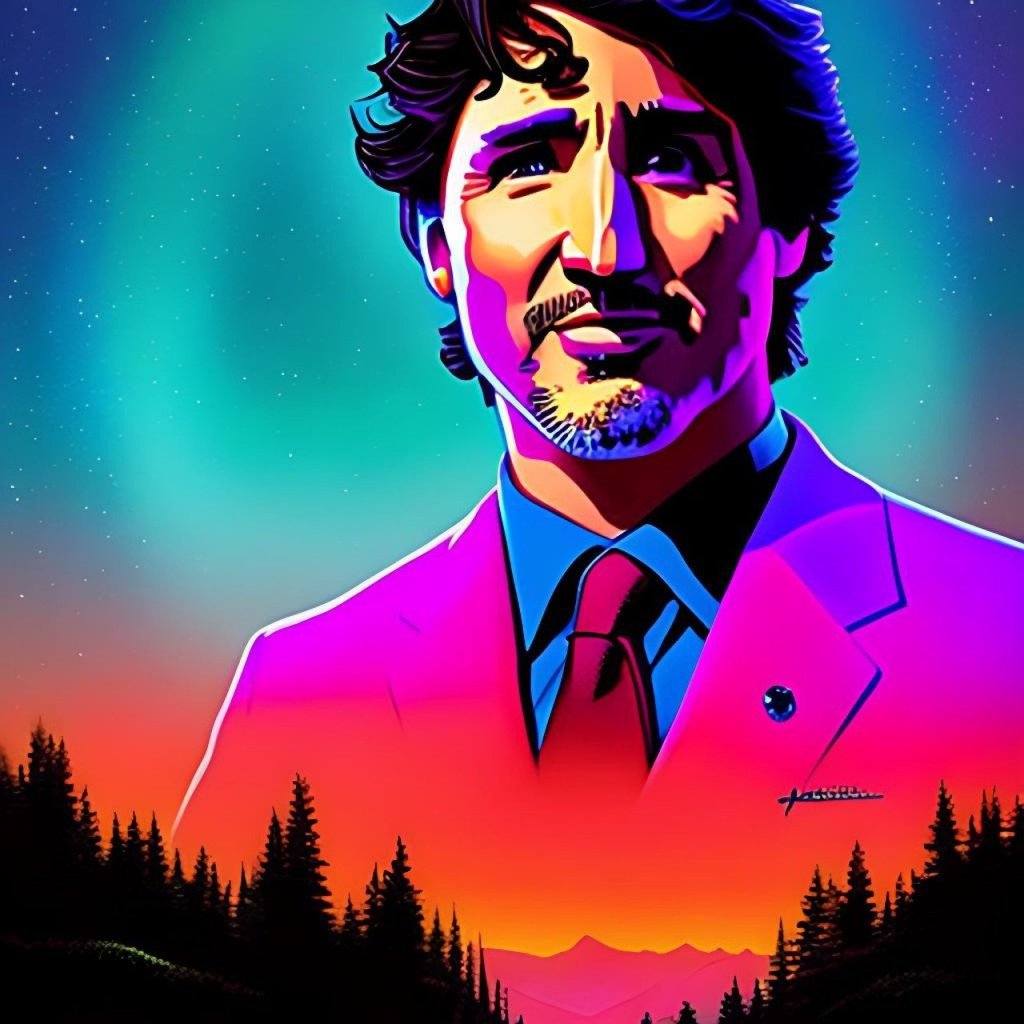
“Last May the Liberals were swept out of power on a flood tide of anti-Trudeau hatred.”
These were the words of Canada’s Cronkite-esque news anchor Knowlton Nash to describe the rebuke of Pierre Trudeau’s Liberal party in the 1979 Federal Elections. This rejection was a significant shift from many Canadians’ euphoria when P. Trudeau first took office a decade earlier, in what was known as the first instance of Trudeaumania. I know you’re probably wondering — why is this dated election so important today? Well, another Trudeau is living in 24 Sussex and is rapidly approaching a decade in power. If you look closely, you can see some unfortunate similarities between father and son, leading us to ask if it’s time for J. Trudeau to throw in the towel before he leads the Liberals to a disastrous loss.
The Dreaded Decade
As any politician approaches a decade in power, people often begin to feel wary of their tenure. Although there are notable exceptions like Franklin Roosevelt in the United States, most, if not all democratic societies experience a form of political transition after eight to ten years of a single-party government. Political scientists have coined this cycle the political pendulum theory. The theory states that public opinion is like a pendulum, swinging back and forth from one party or ideological group to another.
Electoral data suggests that a decade is the sweet spot for political change or when a party loses office. Americans have seen this pendulum trend in the 1960, 1968, 1976, 2000, 2008, and 2016 elections. However, this isn’t exclusive to the U.S. The same thing holds true in Canada’s parliamentary system, in which the 1979, 1984, 1993, 2006, and 2015 elections all demonstrate the back-and-forth swing of the pendulum.
That is not to say that parties or ideologies can’t hold office for over a decade. P. Trudeau is a great example of how a party can hold onto power through an aptly timed transition in leadership. P. Trudeau took office after five years of Liberal Party Control under Lester B. Pearson and extended the Liberal control for another decade, giving the Liberals uninterrupted control over the Canadian government from 1963-1979. P. Trudeau was able to extend the Liberal mandate due to how his 1968 election victory created an aura of change.
Although the Canadian population was voting for the same Liberal party it had elected to office in 1963 and 1965, P. Trudeau’s rhetoric, youth, and intelligence gave hope to many Canadians that he could act as a bridge between the growing divide between Anglophones and Francophones in a way none of his predecessors could. P. Trudeau embodied youth and optimism, which helped him placate the voter’s desire for change from traditional Liberals.
However, P. Trudeau is the exception. A well-executed transition of power to a leader who represents change and the party in control is hard to come by. Canada has a plethora of political martyrs who suffered defeat after a botched transition. The most profound being John Turner, P. Trudeau’s successor; but to understand Turner, we must understand the aftermath of the 1979 loss.
After losing power due to English-Canadian dissatisfaction with his inability to quell Quebec separatism, P. Trudeau called it quits and announced he was stepping down as leader of his party as soon as the party picked his successor. However, a new leader would not have the chance to be elected before the new Progressive Conservative government was defeated in the house and forced to call a snap election in 1980. P. Trudeau took back the reins and made a surprise comeback, allowing him to hold office from 1980-1984. When P. Trudeau finally relinquished leadership, the party only had a year to call another election, and the poll numbers showed the Liberals trailing the opposition Progressive Conservatives.
Although poll numbers were dire, Turner called a snap election months after taking office, hoping his honeymoon period approval boost would allow him to squeak out a victory despite the poll numbers. However, Turner did not have enough time to distinguish himself from the P. Trudeau government — voters suffered from the perception that he was simply a continuation of P. Trudeau. This perception led to a shellacking unseen by the Liberals, as they lost 95 seats and achieved a meager popular vote of 28%. Turner’s performance in that election shows how powerful the swinging pendulum is in electoral politics — a pendulum J. Trudeau must be very aware of today.
The Current State of Canadian Politics
If current polls for the next general election are correct, J. Trudeau’s Liberals will lose, and they will lose by a lot. Polling suggests that if a Canadian election occurred today, the Liberals would receive 25% of the popular vote — less than the 28% that cost Turner 95 seats. With the current composition of the Canadian House, J. Trudeau’s minority government can’t afford to lose one, let alone more than 95 seats.
The poor performance of the Liberals can be attributed to J. Trudeau himself. The pendulum is on the move as Canadians grow tired of J. Trudeau’s tenure in office, despite the increases in the Canada Pension Plan and Guaranteed Income Supplement, as well as the creation of the Childcare Benefit that can be attributed to him. J. Trudeau’s eight years in office have transformed him from someone who represented the change from an incumbent lackluster Prime Minister into that of a lackluster Prime Minister who needs the boot.
The Conservative opposition recently elected a firebrand politician, Pierre Poilievre, as their leader, who embodies the ethos of change Canadians desire. Although J. Trudeau managed to fend off two other Conservative leaders, Poilievre is different. J. Trudeau defeated the other two leaders because the power of the pendulum had not started to work against him, and he faced two lackluster opponents who could not galvanize public support. Poilievre benefits from political luck and personal charisma; he battles a weaker J. Trudeau as the pendulum of public opinion starts its swing against the Liberals after a decade in office, framing himself as a change to the J. Trudeau government in a way his predecessors couldn’t.
Public disapproval towards J. Trudeau on issues like inflation, coupled with Poilievre’s ability to frame himself as the much-needed change Canada desires, creates an uphill battle for J. Trudeau and the Liberals. Pollievere has capitalized on increased public dissatisfaction with inflation and worked to subconsciously link inflation to J. Trudeau in voters’ minds with slogans like Justinflation. Although J. Trudeau has two years until he must call another election, the political tides are swiftly moving against his favor, making re-election in two years nearly impossible.
Justin and Pierre Trudeau
Justin and his father have some glaring similarities as the former approaches his decade in office: low poll numbers, separations from their wives while in office, and the deterioration of their public image as figures of change. Like his father before him, the prolonged time in office has caused the Canadian population to blame Justin for the existential crisis of the era, such as inflation. However, J. Trudeau faces a more dire outlook.
In the lead-up to the 1979 Canadian election, P. Trudeau’s poll numbers were not good, but they were close. Polls suggested that the Progressive Conservatives had a one-to-two-point lead or tied in the popular vote with the Liberals. This slim margin is not the case for J. Trudeau. J. Trudeau faces an uphill battle, with worse margins than Turner had leading up to the 1984 loss. These margins would mean utter ruin for the Liberals, and there is not much J. Trudeau can do in office to stop it. Although the Liberal Party has many problems, J. Trudeau is their biggest problem, as voters are clearly itching for change.
By this point, I know many of you are wondering: So, what is Justin supposed to do, resign? In short, yes. J. Trudeau should look at his father’s last stint as Prime Minister and learn from those mistakes. Near the end of his term, P. Trudeau received even worse poll numbers than his son, with a Gallup poll showing 51% of the population preparing to vote for the Progressive Conservatives, while only 29% for the Liberals. This report occurred less than a year before P. Trudeau left office about a year from when the next election needed to take place. P. Trudeau stepped aside far too close to the next election for the next Prime Minister, John Turner, to have his time at the reins and truly establish himself as the change candidate. When Turner took office and called a snap election in 1984, he knew that the few months he had left before the mandated election in 1985 would not be enough time for him to establish himself as a change candidate. Turner called an election three months after taking office, hoping his honeymoon period approval spike would give him a miraculous victory. But it was not to be because Turner did not have enough time to establish himself as Prime Minister in his own right, and this allowed his opponent to paint him as the continuation of P. Trudeau, leading to voters’ rebuke of the Liberals in that election.
It is unlikely that J. Trudeau can eke out another victory in his own right due to the high voter dissatisfaction with him. Now is ample time to leave office because there are two years till the next election, which is enough time for his successor to establish themselves as Prime Minister and a symbol of change that might be able to revive the Liberal’s standing with the public. So, for the sake of his Liberal Party, J. Trudeau has got to go.
Categories: Foreign Affairs

 The Texas Orator