In the past month, the whole world has been witness to the horrors the citizens of Gaza have endured amidst the start of the Israeli-Hamas conflict. As I write this, nearly 11,078 residents have been killed and nearly 850,000 of the million Palestinians in Gaza have been evacuated. While the United States government has made its commitment clear to stand with Israel, the horrifying images and stories coming out of Gaza have prompted a global outcry from celebrities, officials, and organizations like the United Nations urging Israel to halt their aggressive bombing campaign in a ceasefire and to respect Palestinian autonomy and human rights. In fact, Israeli Prime Minister Benjamin Netanyahu has doubled down and committed to controlling Gaza indefinitely, while the U.S. government has flat out rejected any possibility of a ceasefire.
I have been appalled by our government’s complicity in allowing Israel to violate the rights of Palestinians. I believe this is a critically important time for our country to evaluate our foreign policy by taking apart the details of the brutal history behind the modern state of Israel.
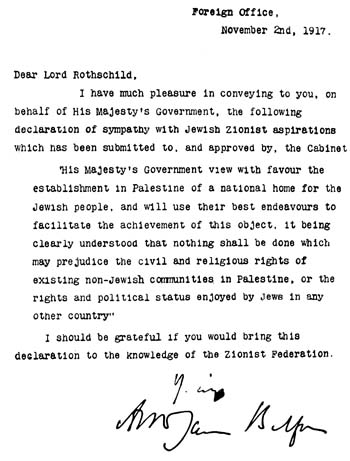
In 1922, Palestine was one of the former Ottoman territories placed under British administration by the League of Nations. All of the territories were made independent, except Palestine, which was established by the Balfour Declaration to be “the home of the Jewish people.” The mass migration of Jews due to World War II and other developments created tension with the indigenous Arabs and led to violence. Without a clear solution, the British handed the problem over to the United Nations to resolve in 1947. The UN offered a two-state plan, but the resolution’s release caused a civil war in Palestine resulting in over half of the Palestinian Arabs fleeing or being expelled along with an Israeli victory. In the subsequent 1967 war, Israel occupied the Palestinian territories of Gaza and the West Bank, causing another exodus of half a million Palestinians. The UN pushed for Israel to return occupied lands and a settlement to refugees, but failed in convincing them to do so. In 1982, Israel invaded Lebanon with the intent to eliminate the Palestinian Liberation Organization (PLO). Shortly after, a ceasefire was arranged. Nevertheless, a Lebanese militia, in coordination with the Israeli army, massacred 2,000-3,500 Palestinians in the Sabra and Shatila refugee camps. Not a single Israeli or Lebanon officer was punished for their crimes. In 1987, opposition to Israel grew in their occupied territories, leading to the first intifada. It was the first organized nonviolent series of Palestinian demonstrations against Israeli occupation. Unfortunately, it was promptly met with police brutality leading to many civilian casualties, mirroring the resistance of Black Lives Matter and Civil Rights protests.
For the better part of the 20th century, Israel established and expanded its state on the foundation of occupation and settler colonialism, while Palestinians attempted to resist within their limited resources and space. Mild progress was made towards peace in the 1990s, with the mutual signing of the Oslo Accord which provided Palestinians with partial autonomy and promised a withdrawal of forces from occupied territories. It appeared that perhaps the Palestinian people would finally achieve some semblance of freedom. However, Israel continued to violate the sovereignty and rights of Palestinians. They began construction of a wall in the occupied West Bank that was deemed illegal by the International Criminal Court of Justice in 2004. The Gaza withdrawal of settlers and soldiers in 2005 was also conducted in bad faith as Israel continued to control Palestinian sovereignty and blockaded the Strip from air, land, and sea. The inhumane conditions of this blockade have been categorized as an apartheid against Palestinians through investigations conducted by advocacy organizations such as Amnesty International. This has only been made worse by the current war, in which Israel has completely cut innocent Gaza civilians off from essential utilities like water and electricity.
Israel’s repeatedly genocidal attitude towards Palestinians over the past century has not occurred in a vacuum but with the proud support of the United States’ fiscal and military power. In fact, the U.S. has given more aid to Israel than any other country since World War II, a staggering $260 billion. Previous presidents like Republican Donald Trump have publicly stumped for Israel by legitimizing their illegal occupations in the West Bank, essentially giving their state a green light for continuing the illegal occupation of Palestinians. Even current president Democrat Joe Biden continued Trump’s legacy of recognizing Jerusalem as the capital of Israel, despite the UN voting against so. Thus, both political parties find common ground in their support of Israel’s occupation.
Given all of this information, what hope is there for Palestinians and future prospects for peace? I personally am encouraged and proud to see the hundreds and thousands of protestors standing up across the world in solidarity with the Palestinian people. While substantive change may be decades away, it is important we tell the history of genocide, occupation, and apartheid that has happened and is ongoing against the Palestinian people. As Martin Luther King Jr. said, “Injustice anywhere, is a threat to justice everywhere.” Therefore, it is of paramount importance we call out our country’s complicity with Israel’s crimes against humanity and speak out against genocide.
Categories: Foreign Affairs

 The Texas Orator